I hope this newsletter reaches you well in these times. After a full ten year cycle—June 29, 2015 - June 29, 2026— I am writing with the announcement that Monday’s image has officially concluded as a project.
The idea for Monday’s imagebegan when I moved to New York in 2013. I devised a structure to locate particular sets of information on the Internet and make a research project in visual juxtaposition. It ran in parallel with my painting practice and I launched it as a weekly RSS in 2015.
Notes on process: I would begin with a digital image of the front page of a major newspaper. The newspaper choice was determined by where I was located on that particular Monday (a G.P.S. of sorts). I would read the front page, make hashtags from the headlines, and begin searching through digital collections online. The goal was to create a digital pairing—a twinning—of the front page with an artwork from a museum collection or non-profit foundation. These pairings were semiotic reflections on the content of news articles that dominated the front page, the respective images that accompanied them, and the possibility for artworks to resonate beyond the time they were made. In other words, the afterlives of images. Another goal was to seek out works lesser known to the public, and utilize digitized collections worldwide. Each artwork I chose was hyperlinked back to its source collection. After ten years of searching through databases, one learns a great deal about your own subjectivity—along with the subjectivities of collections, and perhaps more illuminating, the gaps or blind spots in both.
Given I that lived in New York, I used the front page of The New York Times most days. While traveling, I used newspapers such as Le Monde, The Irish Examiner, Corriere della Sera, etc. Without the stunning and courageous work of photojournalists, the front page wouldn’t be the front page as we know it. Using their content, photo editors and designers at the New York Times assemble dramatic visual layouts, akin to cinematic montages. This was also the case with the Los Angeles Times many years ago. Throughout childhood, my father would bring home the L.A. Times newspaper on Sunday. It was like an art object, thick as a book, and it would take all day to get through it. Later, we would discuss current events at the dinner table. When I think of my hometown, I connect its imaginary to its newspaper—even though the ‘Hollywood’ sign dominates the global perception of the place. The reportage of seasonal L.A. fires, earthquakes or dramatic weather events appeared like film stills on the front page. Reality blended with fiction in the land of sunshine and noir. It was the printed quality of the photographs, the specificity of newspaper inks, the glitches and off register of a particular print run, the physicality of ink rubbing onto one’s fingers, and the glint of silver/copper/aluminum mixed with CMYK color that held my vision. A chromatic blend of the natural and artificial.
In art school, and beyond, I developed great interest in the work of Ed Ruscha, Robert Rauschenberg, Jasper Johns, Andy Warhol, Corita Kent, Sigmar Polke, and other artists who used the newspaper as source material or the newspaper as an object in their work. I still remember the thrill of making a photographic transfer from newspaper using solvents—one of the first experiments in printmaking class. While making Monday’s image, I discovered Greek-American artist Chryssa, and her experimentation with the newspaper form in the early 1960s. A contemporary of Warhol, Chryssa lived in downtown New York, but was much lesser known at the time. It was rewarding to then encounter a large survey of her work in sculpture, drawing, printmaking, and installation at the Dia Foundation, Chelsea in 2023.
Due to my conversations with scholar Alice Centamore in 2018 I learned of Simone Forti’s improvisational performances titled News Animations, an homage to her father that responded to news headlines via movement. And later in discussion with writer and curator, Silvia Benedetti, I discovered the work of Beatriz González, whose paintings use news photographs to re-present histories of Colombia that interrogate collective memory.
In 2020, Monday’s image led me to seek collaboration with curator and art historian, Ksenia Nouril, and The Print Center in Philadelphia. Together, we organized Fit to Print—a virtual group exhibition whose idea germinated during the Covid-19 pandemic and opened online in 2021. I produced a broadsheet from Monday’s image and dye-sublimation prints on silk—the latter inspired by Rauschenberg’s Hoarfrost Editions (1974), solvent-transfer prints created at Gemini G.E.L. in Los Angeles, which I viewed many years ago at the National Gallery of Art in Washington, D.C.
A biographical note: I lived and worked in Washington, D.C. during the mid-aughts, and began my teaching career working with students at the Corcoran College of Art & Design, George Washington University and Arlington Arts Center. At that time, I lived relatively close to the National Mall and would pass by the Newseum (now closed) many times. On the sidewalk in front of its entrance, there were long glass vitrines, where national and international broadsheets were placed inside every day. One could view the front pages in adjacency and compare the varying degrees of similarity and difference. Looking back, that regular encounter was seminal to the creation of Monday’s image.
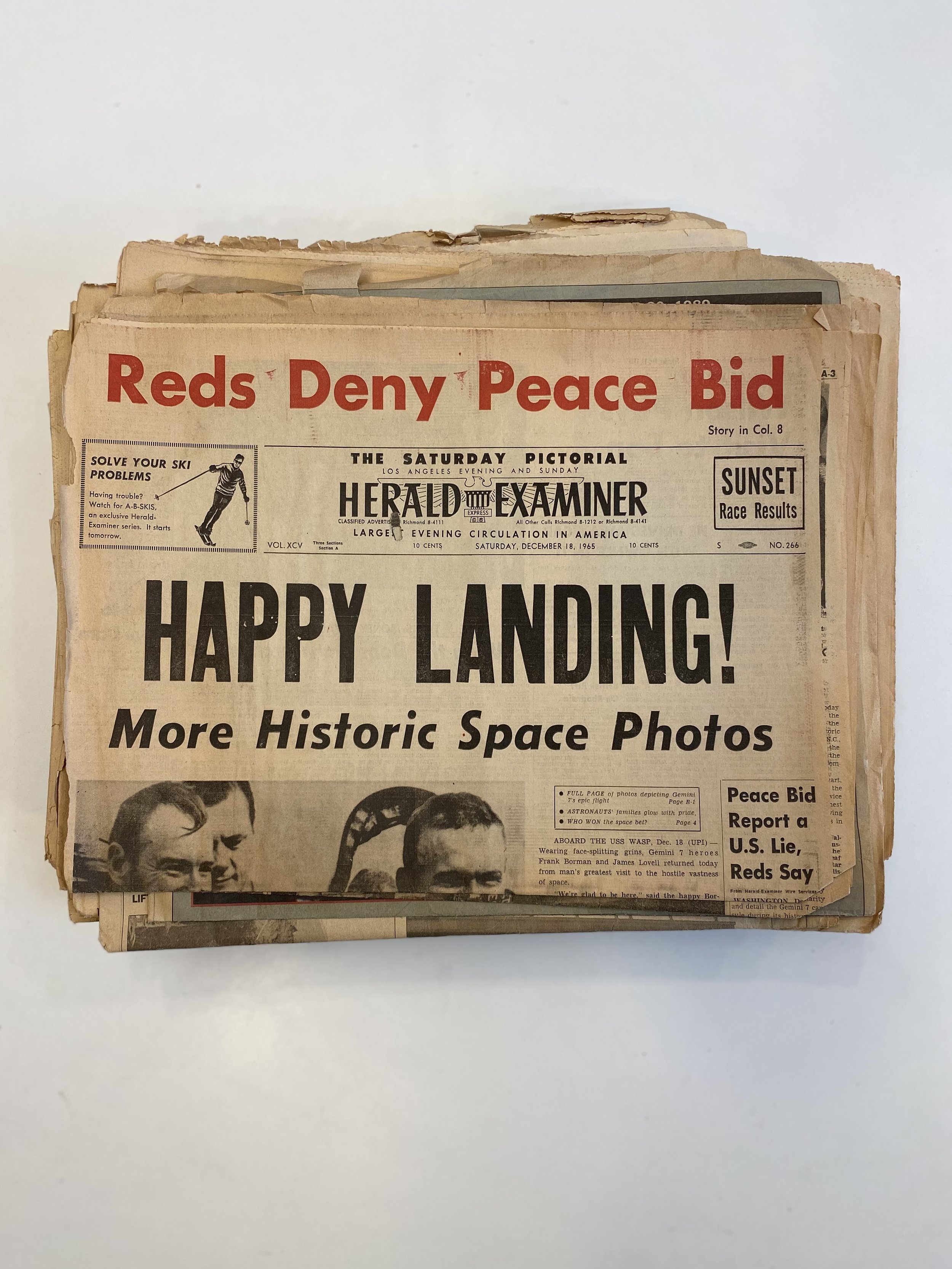
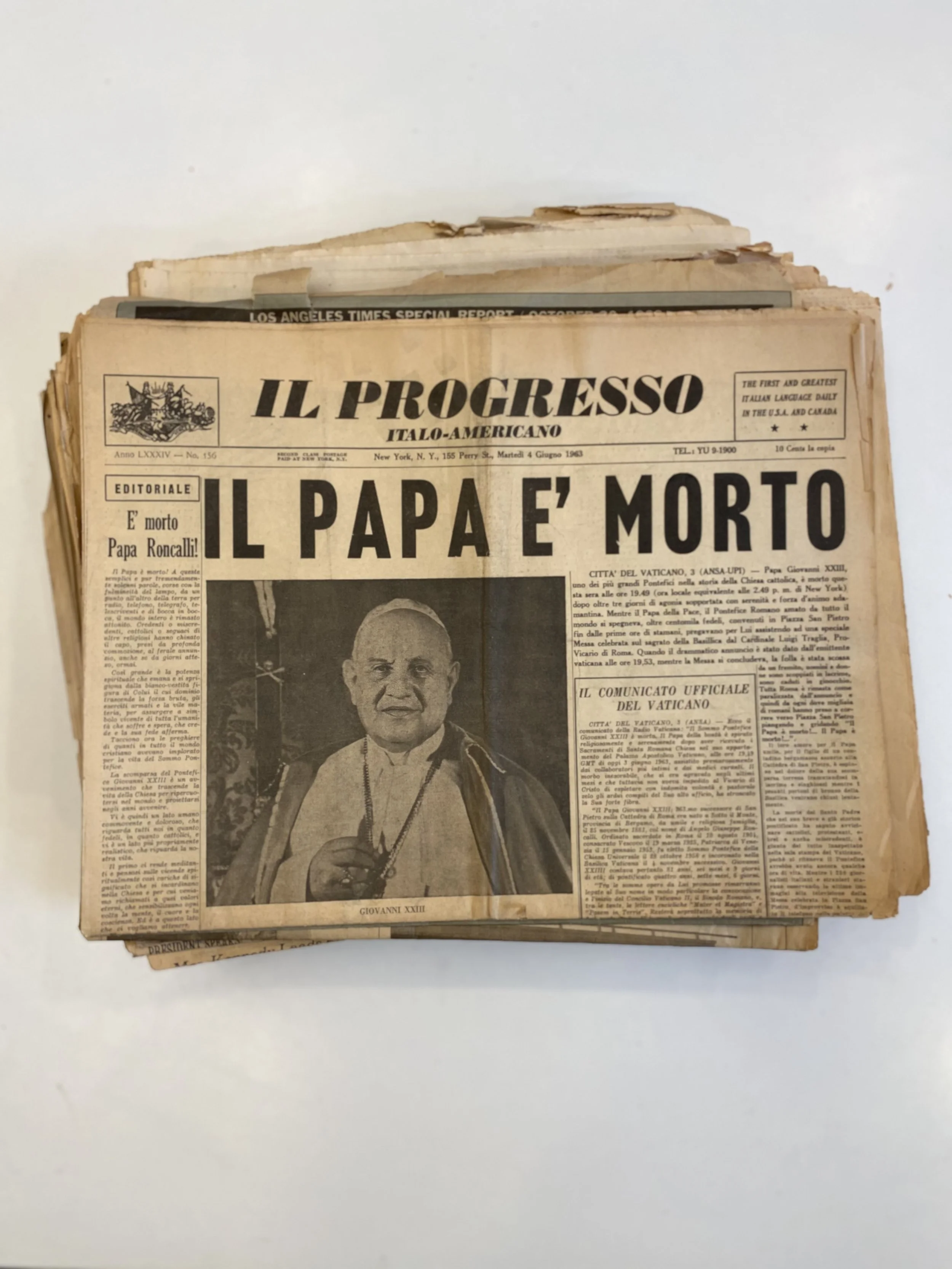
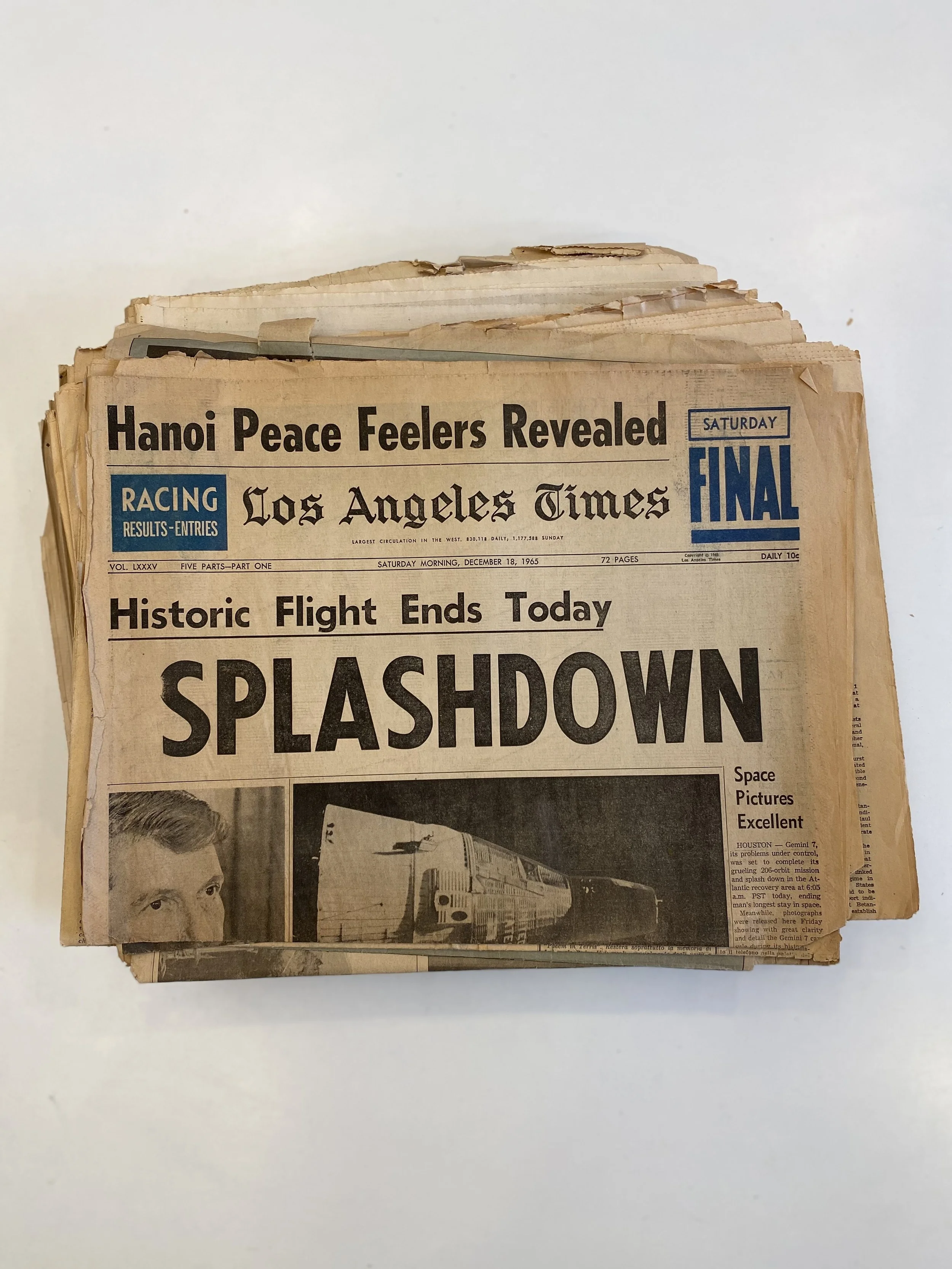
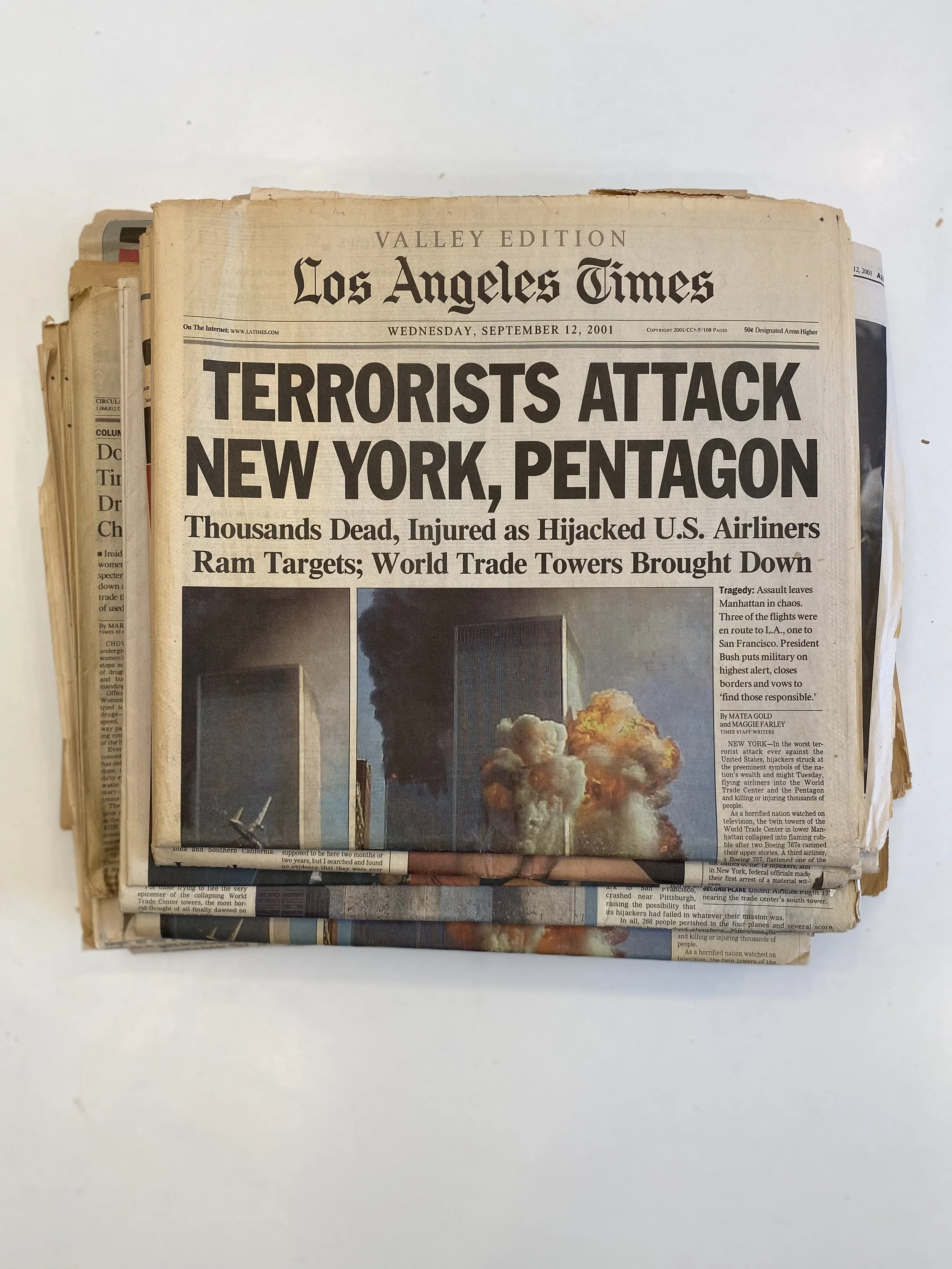
Although our consumption of the news has been largely overtaken by the digital, I continue to collect images from the printed paper. These are organized by subject and placed into binders entitled HAZMAT, a process of archiving that I began soon after graduate school. I have a small collection of entire newspapers documenting historical events, which gather dust and yellow over time. After my father passed away, I found his collection of newspapers (images below), and realized we shared the same obsession: an interest in the physicality of the printed paper as an object, and the slippages between the historical and contemporary.
Thank you, dear readers and viewers, for your attentiveness, comments and interest in following Monday’s image over the years. Its entirety can be viewed on my website, and I’m currently updating the @mondaysimage archive on Instagram. At present, I am pondering new ideas and forms of collaboration, another cycle is yet to germinate—stay tuned.