Painting's Page: August 24, 2026

I’ve just returned from Basel, to view the Helen Frankenthaler exhibition at Kunstmuseum Basel, along with the permanent collection. What an inspiring few days!

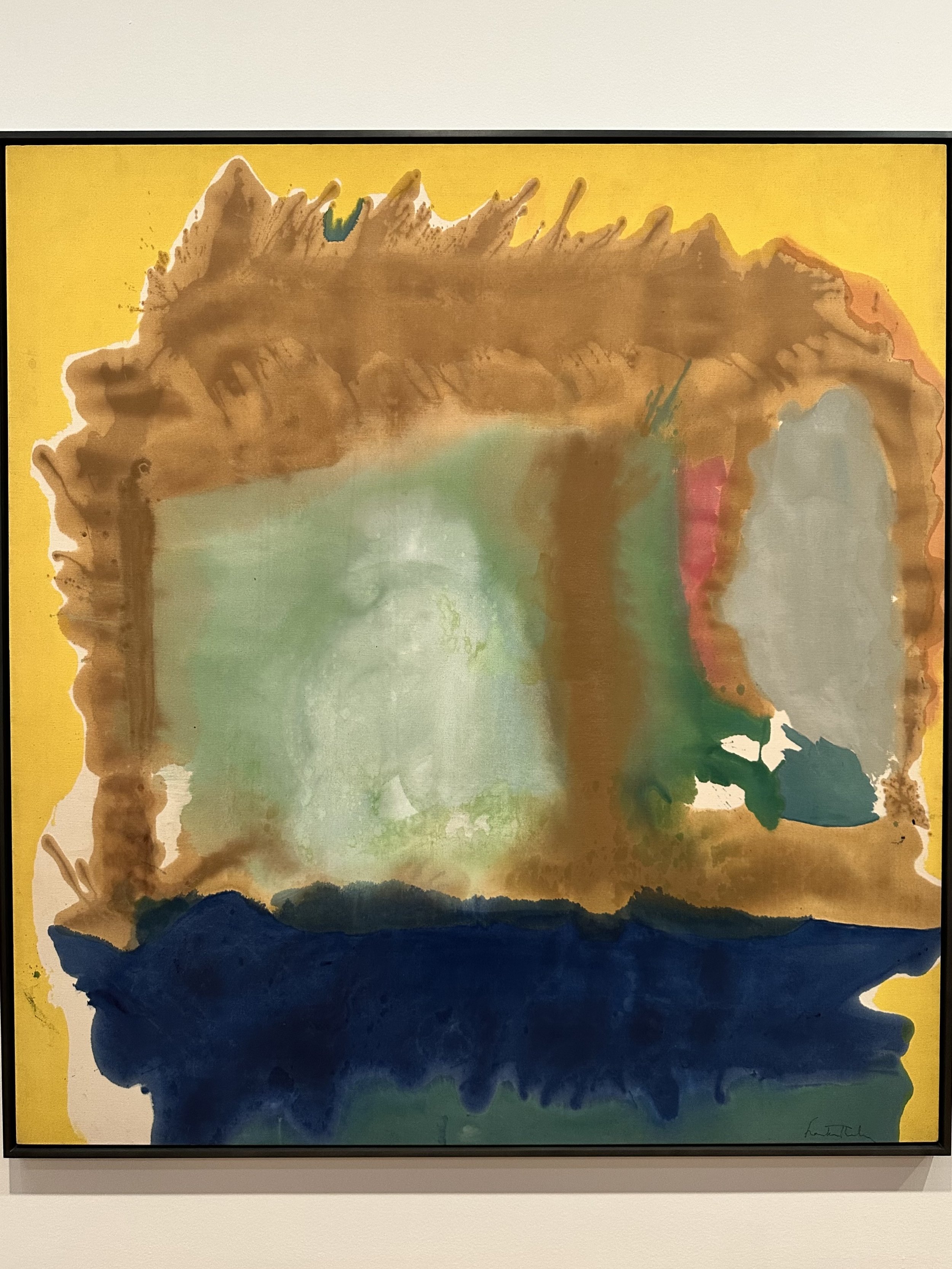
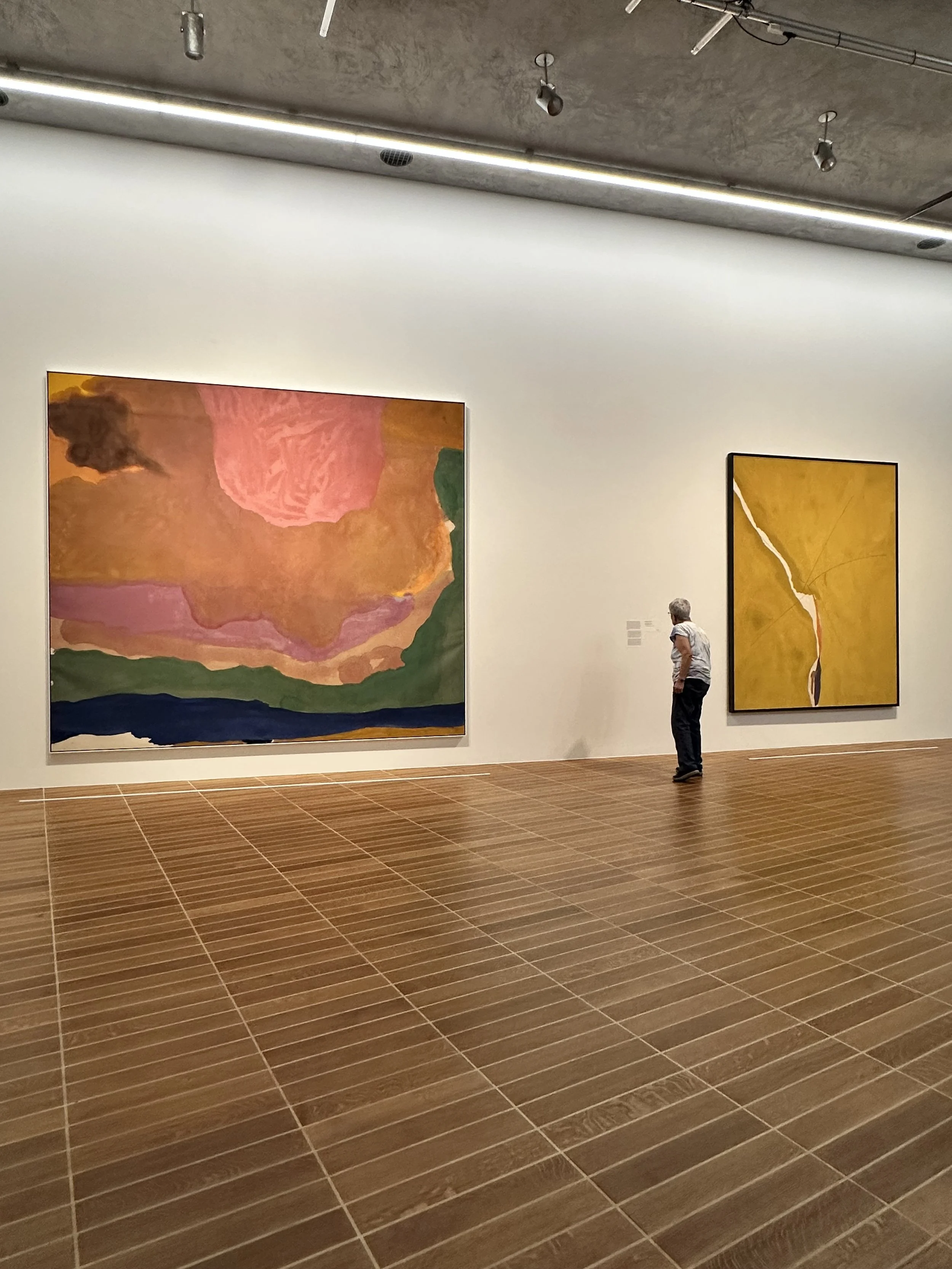
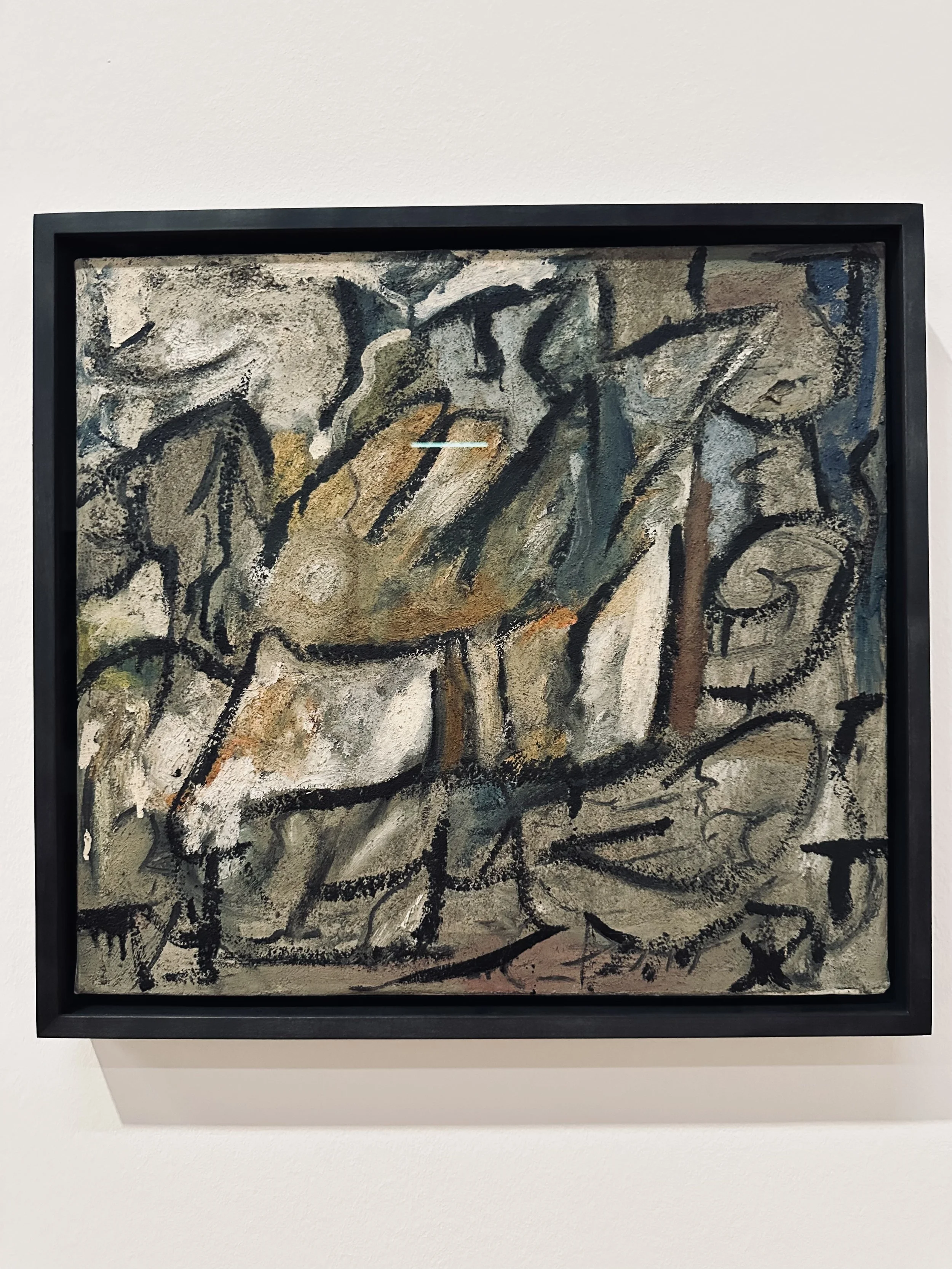
In viewing Frankenthaler’s early work, August Weather (1951), I found that she shared a great affinity with fellow abstract painter Lee Krasner, in palette, form and composition. Then a few years later, in Shatter (1953), her process opens up by methods of pouring, staining—her shapes loosen via layered transparencies of pigment on raw canvas. Another surprise was to encounter Flood (1967), an image which I’ve viewed several times online, but never encountered its enormous scale in situ—Flood literally swallows the wall.

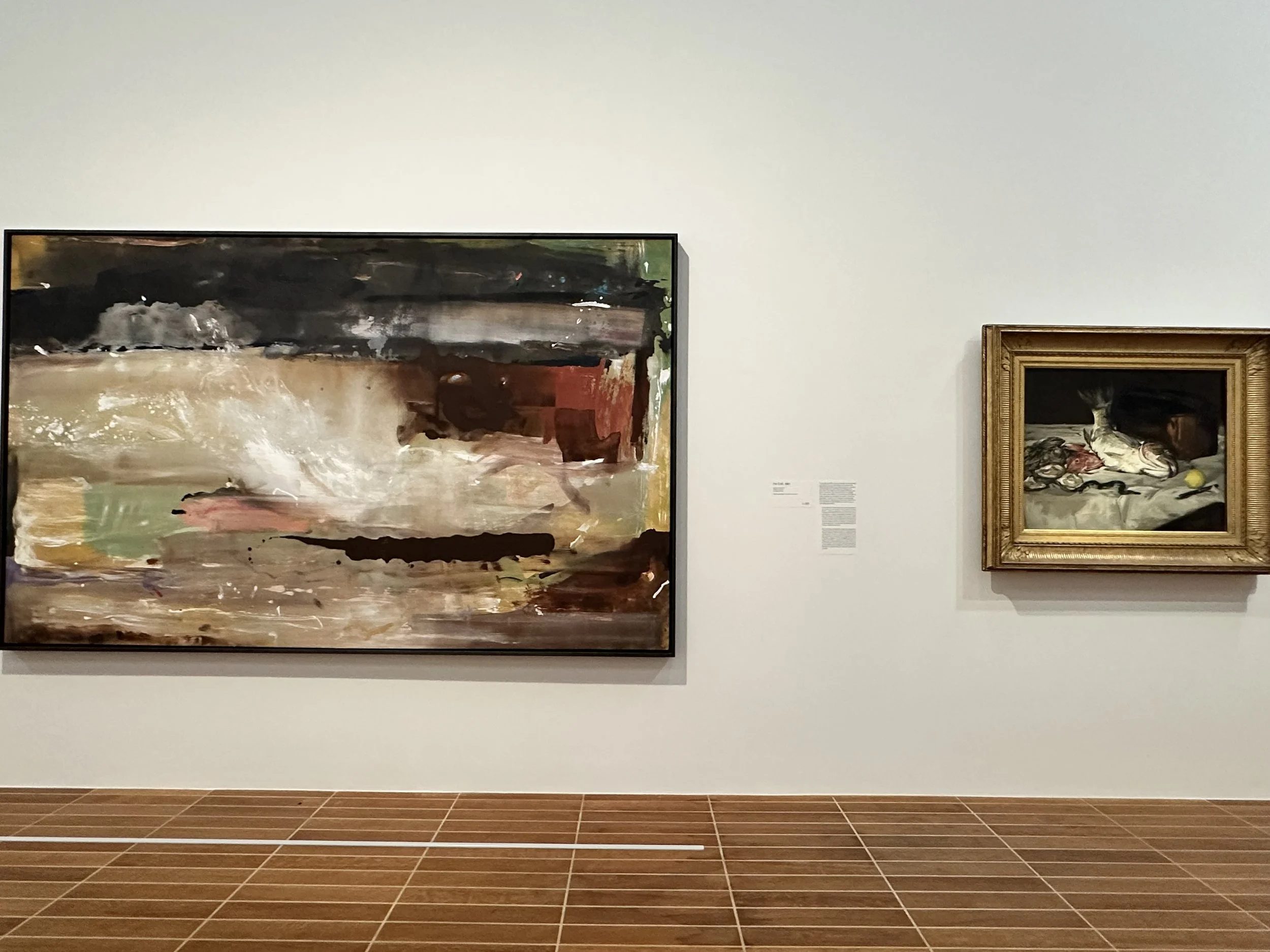
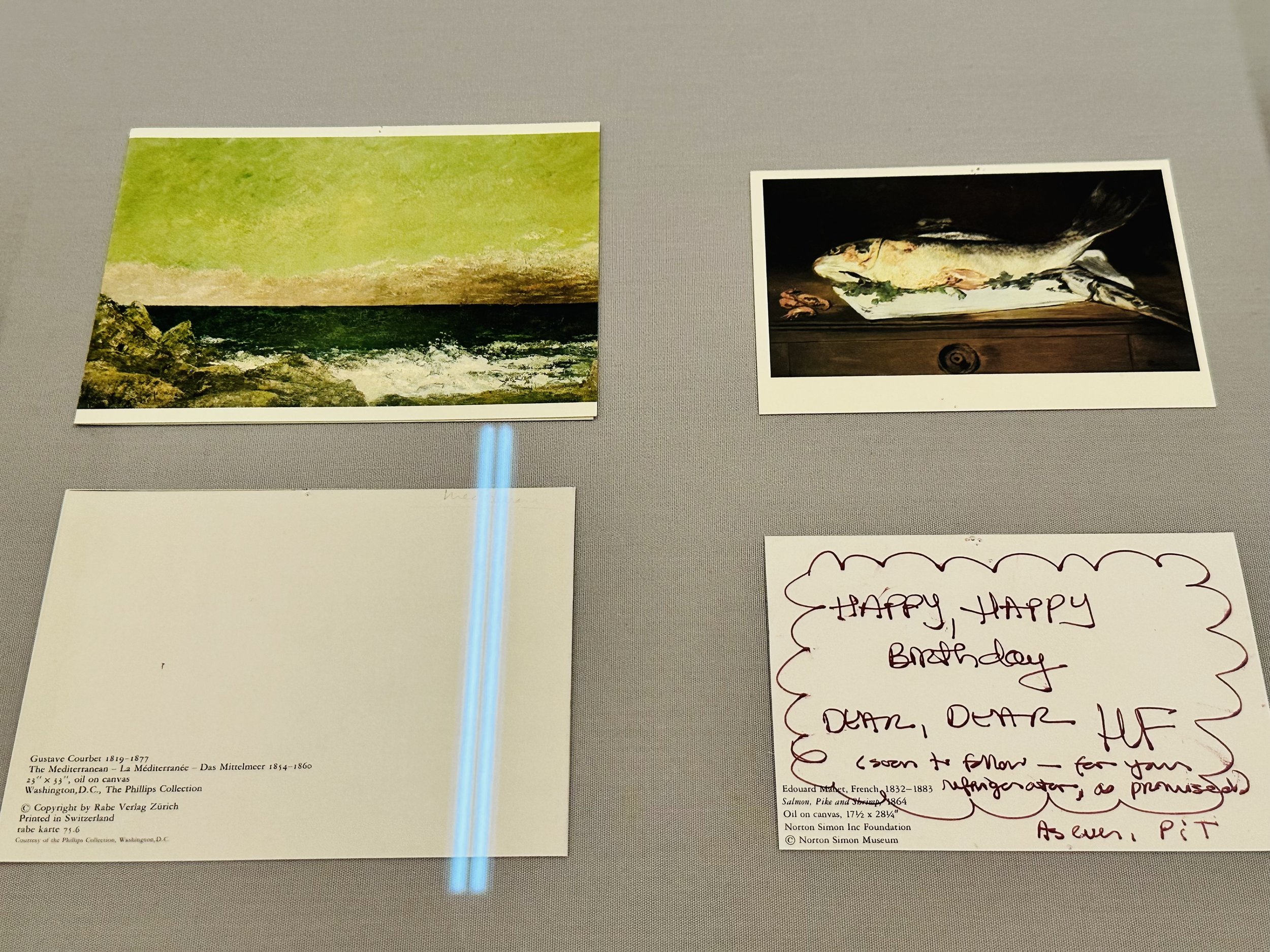
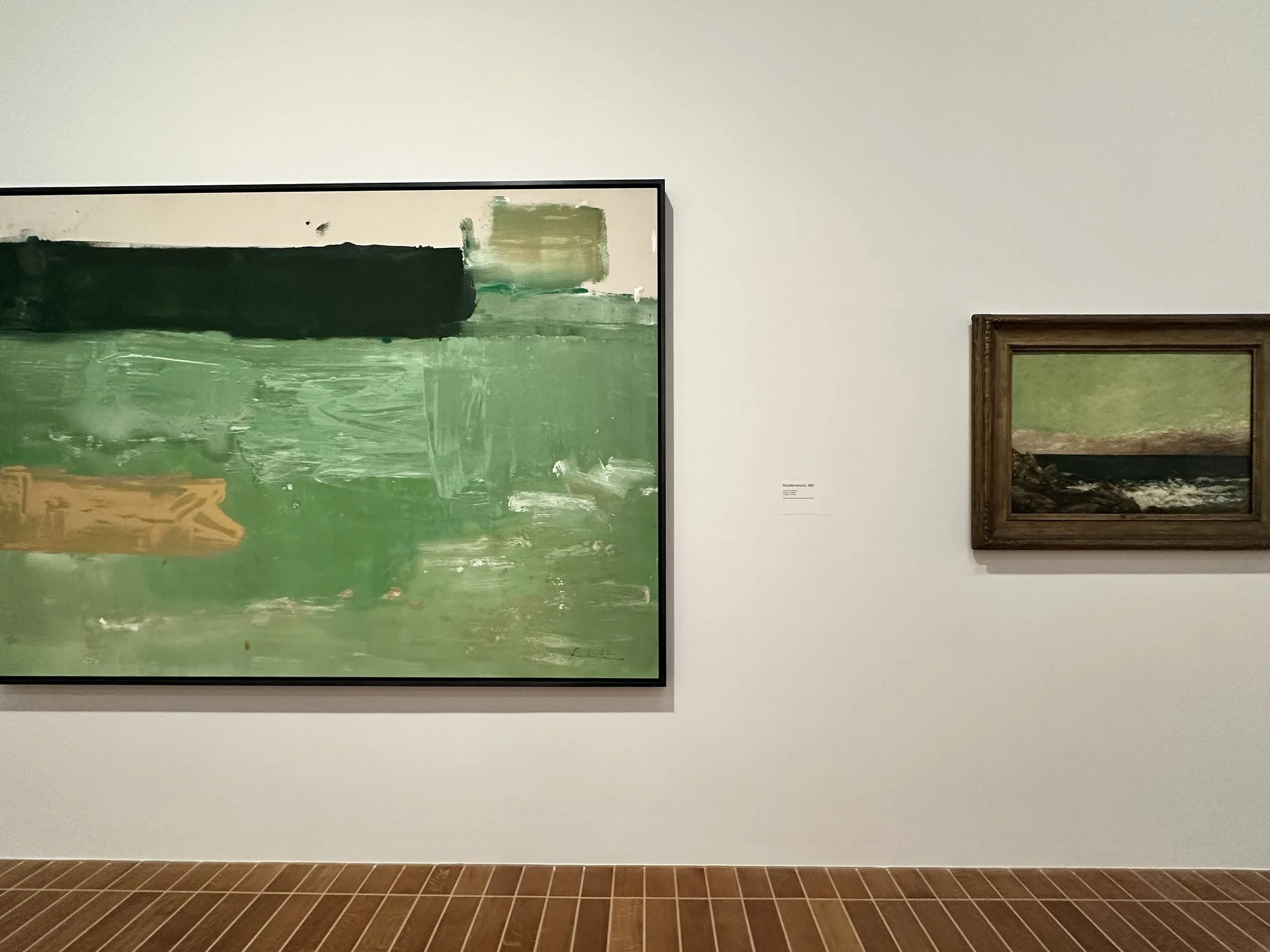
It was a revelation to see adjacencies of works from art history that she directly quotes or reinvents via abstraction. After viewing a recent panel discussion on Kunstmuseum’s YouTube channel, I learned that this installation of pairings has never been done before, but it was Frankenthaler’s wish to one day realize it. There was a combination of works from various collections or the printed images of said works installed next to Frankenthaler’s paintings. For example, the viewer encounters a seascape by Gustave Courbet from the Philipps Collection in Washington, D.C., a painting with a sharp horizontal line dividing the spatial zone of sea and sky. Frankenthaler literally flips the composition, where the sky is below, the sea is above. Its expansive horizontality and chroma directs our gaze from one side to the other, a dream-like sensation from nature.

The other pairing that struck me was her work installed next to a Manet still life painting from the Art Institute of Chicago. Frankenthaler removes the fish, and explodes Manet’s still life—objects disintegrate into pure gesture, pure paint, the painting’s proportions enlarged, as if engulfing the intimate viewing of a still life. The curators also included postcards in a vitrine, of which I was thrilled to view. As we artists keep similar postcards or printed images of other paintings pinned up to our studio walls, as bookmarks, or send them to our close friends and interlocutors. What a surprise to find one sent to Helen Frankenthaler by the great curator and writer, Phyllis Tuchman!

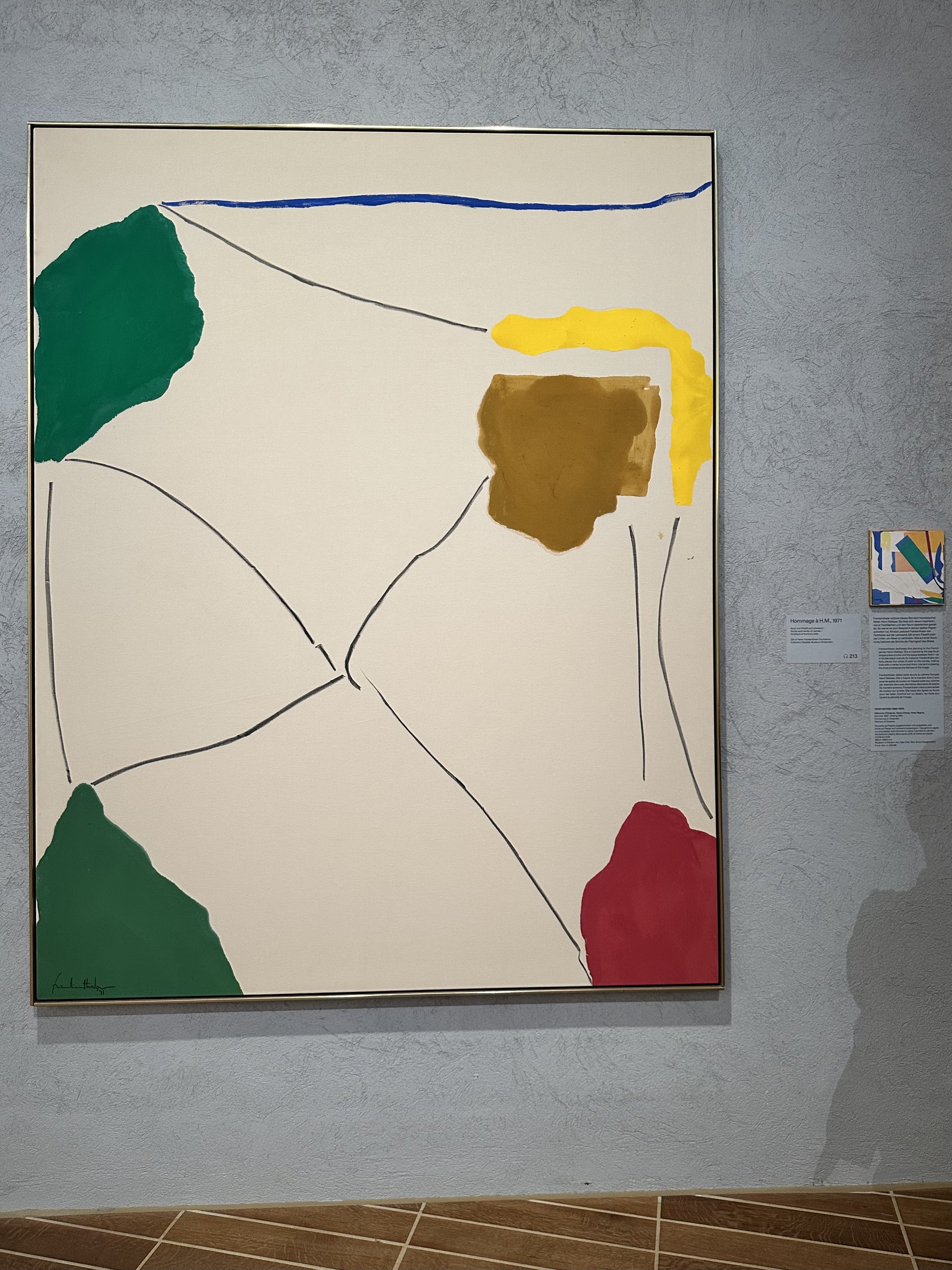
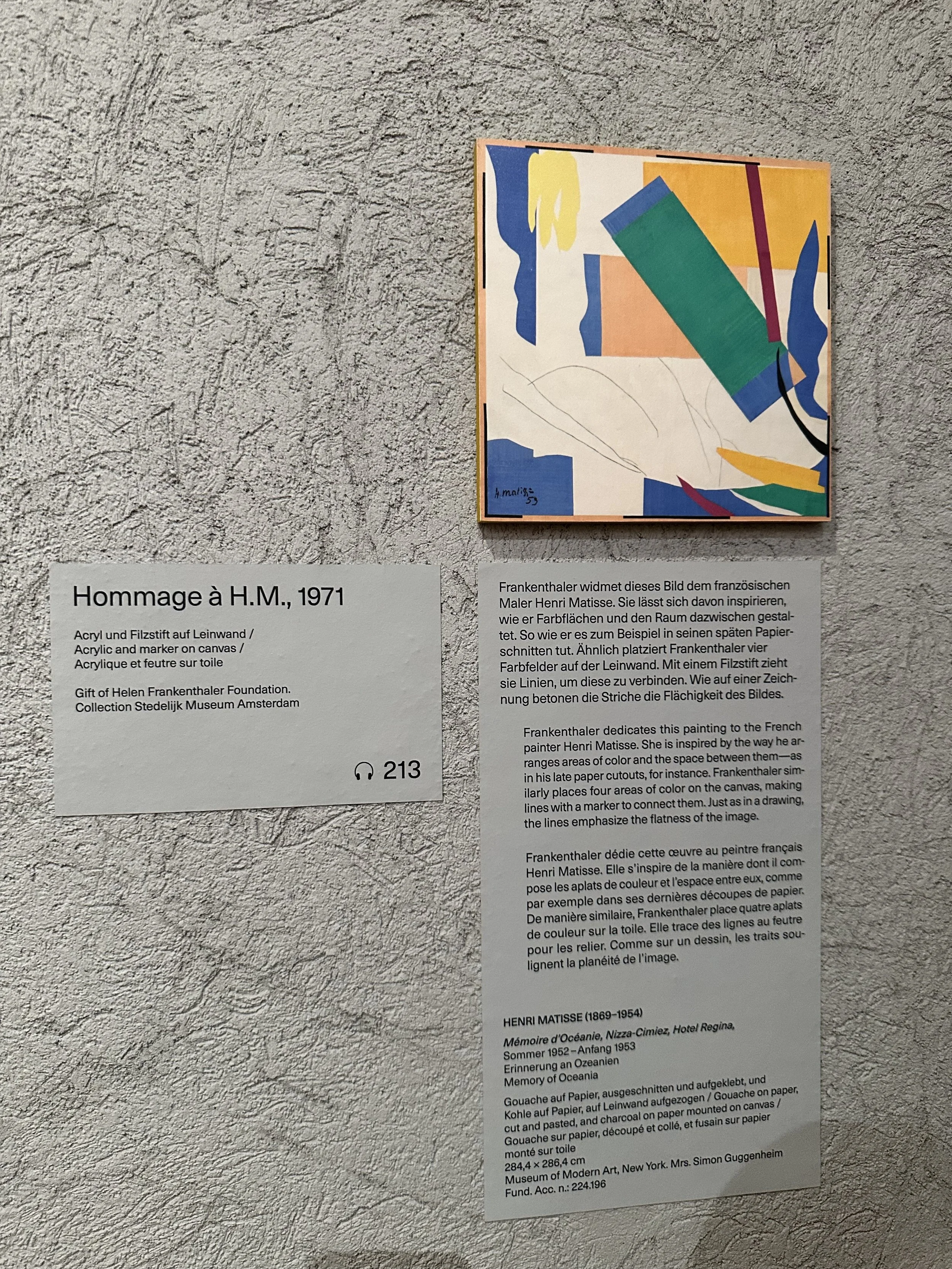
My journey to Basel was a palimpsest of discoveries. Another surprise was to find Frankenthaler’s homage to Henri Matisse’s—Memory of Oceania (1952-1953), a painting I’ve viewed several times at the Museum of Modern Art in New York. The image of this painting is pasted into my music paper notebook, which I use as a sketchbook of notes on process, images of other paintings, thumbnails of projects I am planning, etc. Frankenthaler’s rendition of Matisse reminded me of Mary Heilmann, (1940-2026), the late, great painter from California whose work was admired the world over, as was she. We continue to learn and are in awe of our forebears.
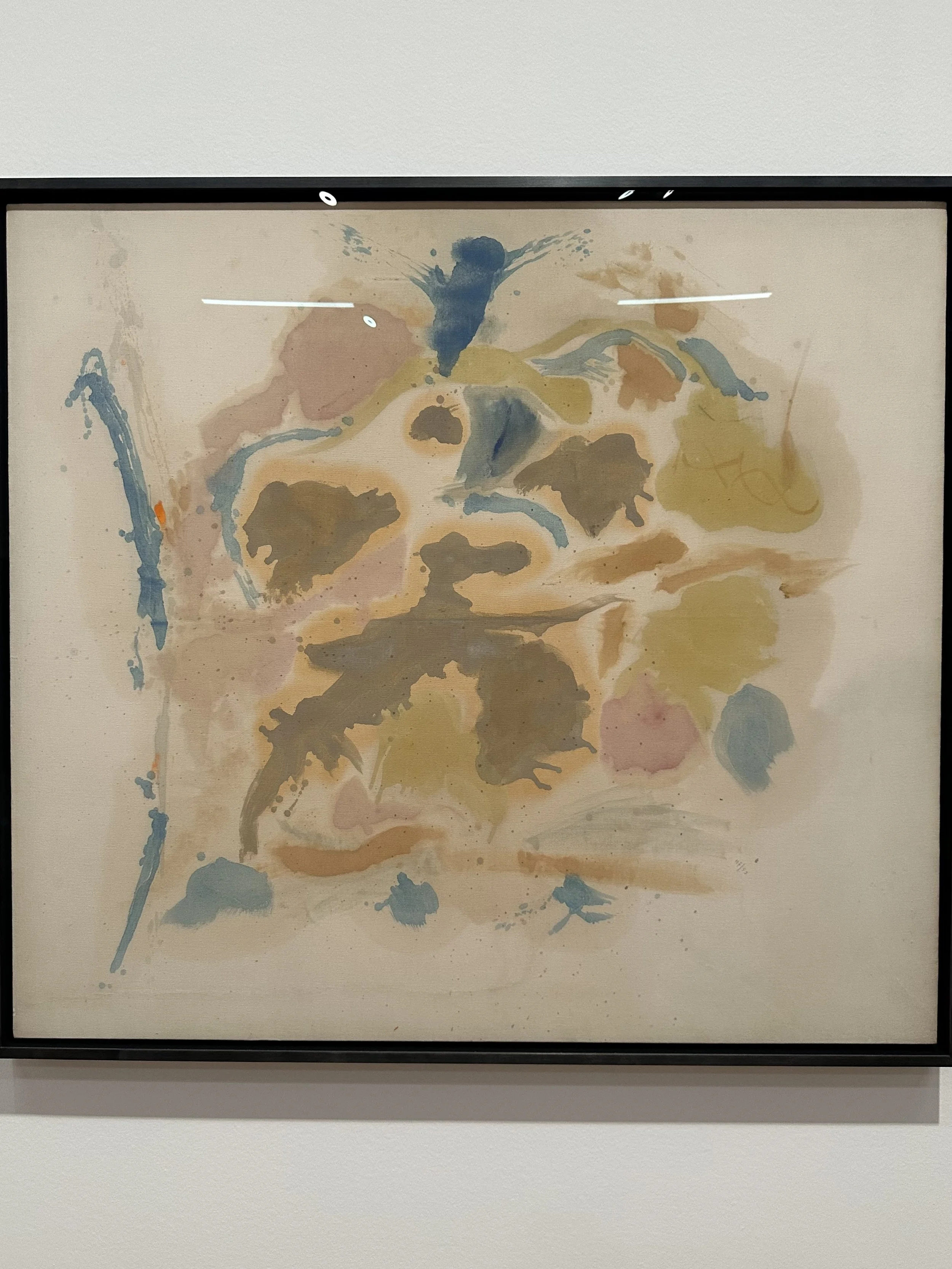
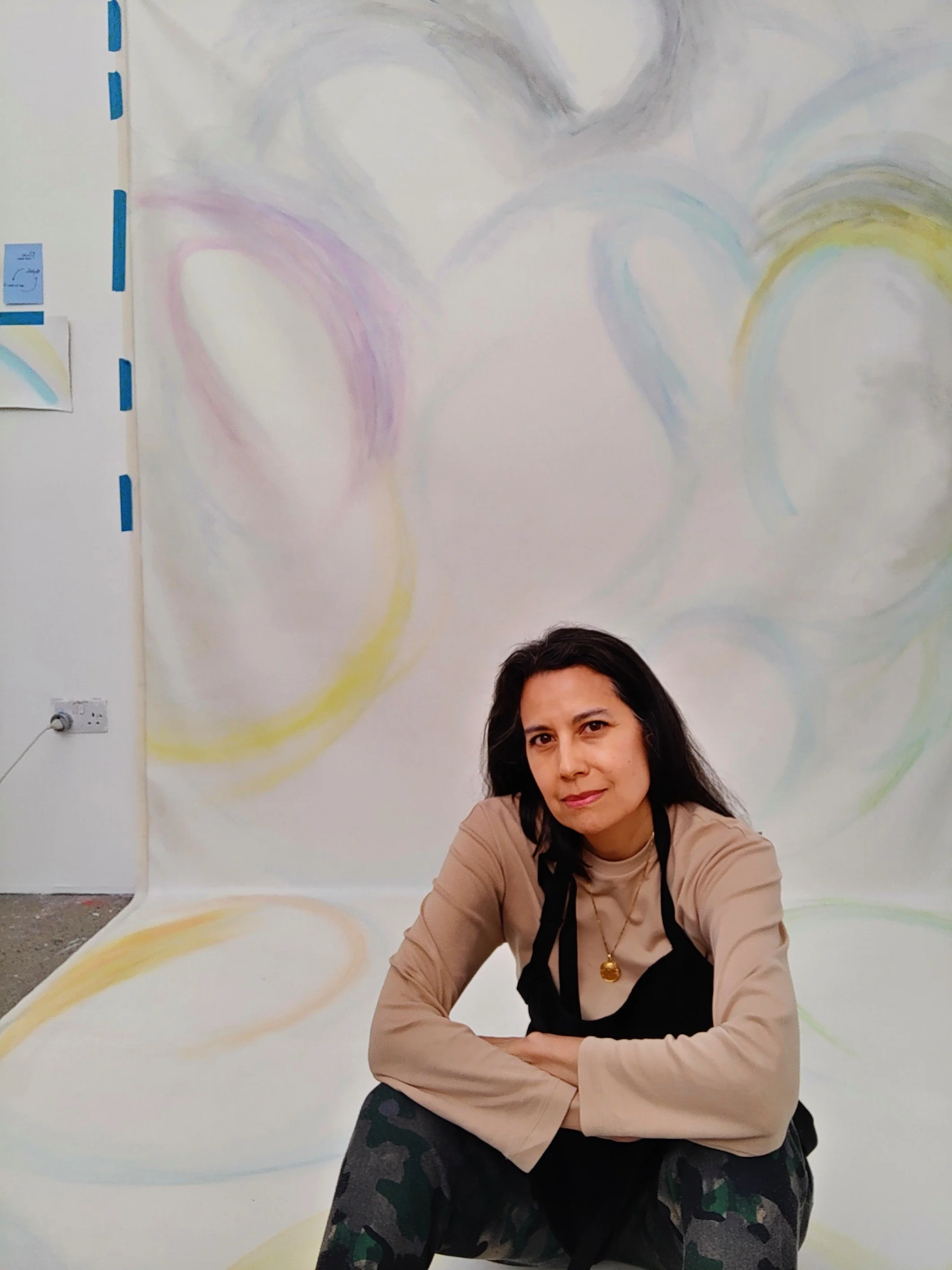
August 2026: Me standing in front of Helen Frankenthaler, Cloud Burst, 2002, Acrylic on canvas, Helen Frankenthaler Foundation, New York, Kunstmuseum, Basel, Switzerland.

Lisa Blas, 2021-2022: Pages from my music paper sketchbooks that include notes, works in progress and images of inspiration.

Photo: Brad Farwell
Painting's Page: August 17, 2026

This past July while in Dublin, I visited William Blake: The Age of Romantic Fantasy, an exhibition at National Gallery of Ireland — positioning William Blake at the center with his contemporaries and admirers. Attached are two scans from my music paper notebook, which I use as a tool for my observations, writings and project development as I move through time in my painting practice.

In thinking about this exhibition, I kept returning to specific images that I took with my phone camera while in the gallery. These consist of works by Blake in addition to other artists whose work I had never encountered previously. Firstly, what struck me in Blake’s “The Bard, From Gray” was its near illegibility—meaning, the dense application of gold leaf / egg tempera in what he described as a ‘fresco technique’. From afar, it appeared as a gleaming abstraction, with the scene unfolding only after one veers close to the surface of the painting. Contorted figures slowly reveal themselves amidst the curving gestures and forms within the composition. As if a page from an illuminated manuscript, this work inhabits a singular universe, a visual language unto its own.

In “Satan Smiting Job With Sore Boils”, an ink and tempera work on mahogany, the image unfolds with the ephemeral quality of a watercolor. A narrative scene dramatically unfolds, with fragments of landscape pieced together in the background space (detail below). I found this rendering of landscape incredibly contemporary, futuristic even, projecting ahead in time to the world of science fiction. In “Teach These Souls to Fly”, 1794, another narrative unfolds where gravity pulls us horizontally through the composition, as if we are with the two characters in space. Blake’s abstract bands of painterly color drape the background sky, evoking canonical works from modernist painting. In using materials and techniques such as etching, ink and watercolor, Blake achieves a timelessness in his work, the transitory within the historical, a fantastical contemporary.

— Throughout the several rooms, I discovered compelling watercolors by William James Muller, Thomas Girtin, and Alexander Cozens. The depiction of architecture and landscape, vulnerable against the backdrop of nature’s turbulence, brought to mind the late works of John Constable, JMW Turner, and Victor Hugo. In Cozens’s work, I learned that he became known for his ‘blot’ paintings, compositions that grew out of random marks. Such description led me back in time to spring 2025, when I visited an exhibition of Victor Hugo’s ink drawings at The Royal Academy in London. In using similar techniques of erasure and blotting, amid depictions of animals, architecture, the human form, etc., Hugo created a space in between—an abstraction that suspends time, or collapses time.

The last image below is by John Hamilton Mortimer, Fish Devouring Shell Food, Watercolor and ink on paper, from the collection of Tate, U.K.

From the eighteenth century, fast forward to the twenty-first century. The savagery of this image is unforgettable, an exquisite rendering of nature that appears human-like, survivalist greed thrashing it out amid the ephemeral, watery, dreamy atmosphere of a timeless, romantic landscape.

Lisa Blas, sketchbook, August 2026

Lisa Blas, sketchbook, August 2026

John Hamilton Mortimer (1740–1779,), Fish Devouring Shell Food, undated, Watercolor and ink on paper, 281 × 424 millimeters, Tate, U.K.

Painting's Page: April 8, 2026

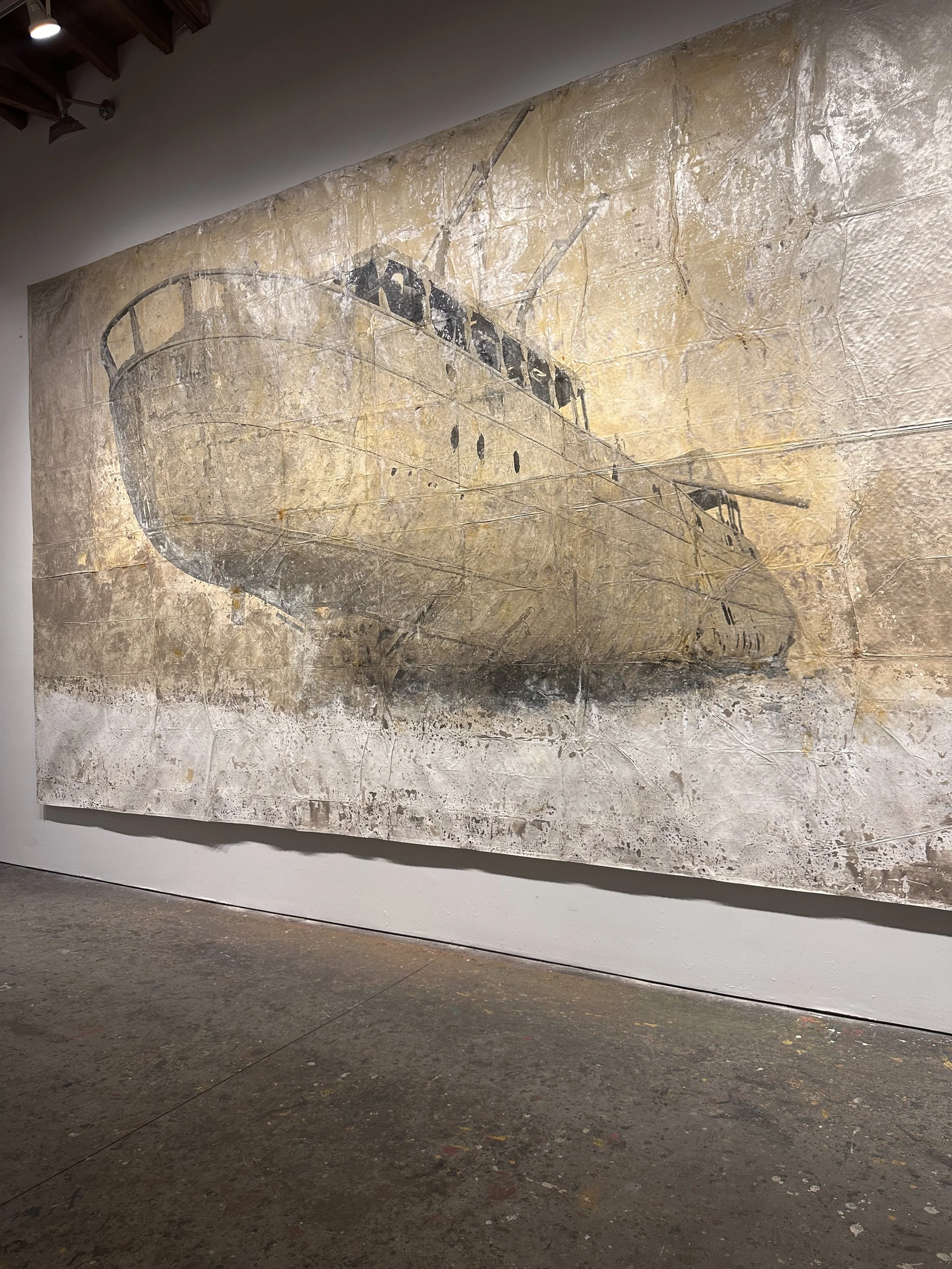
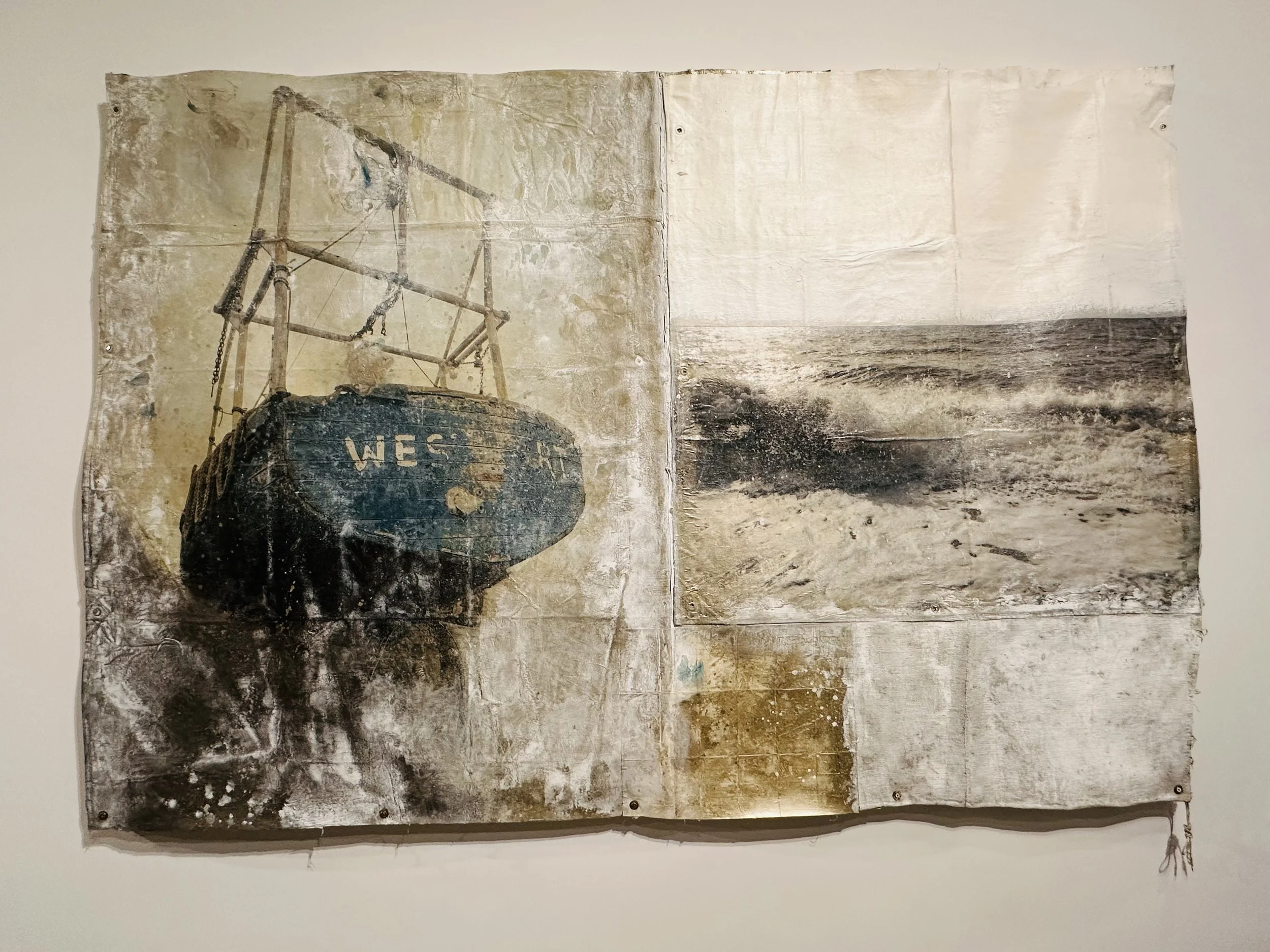
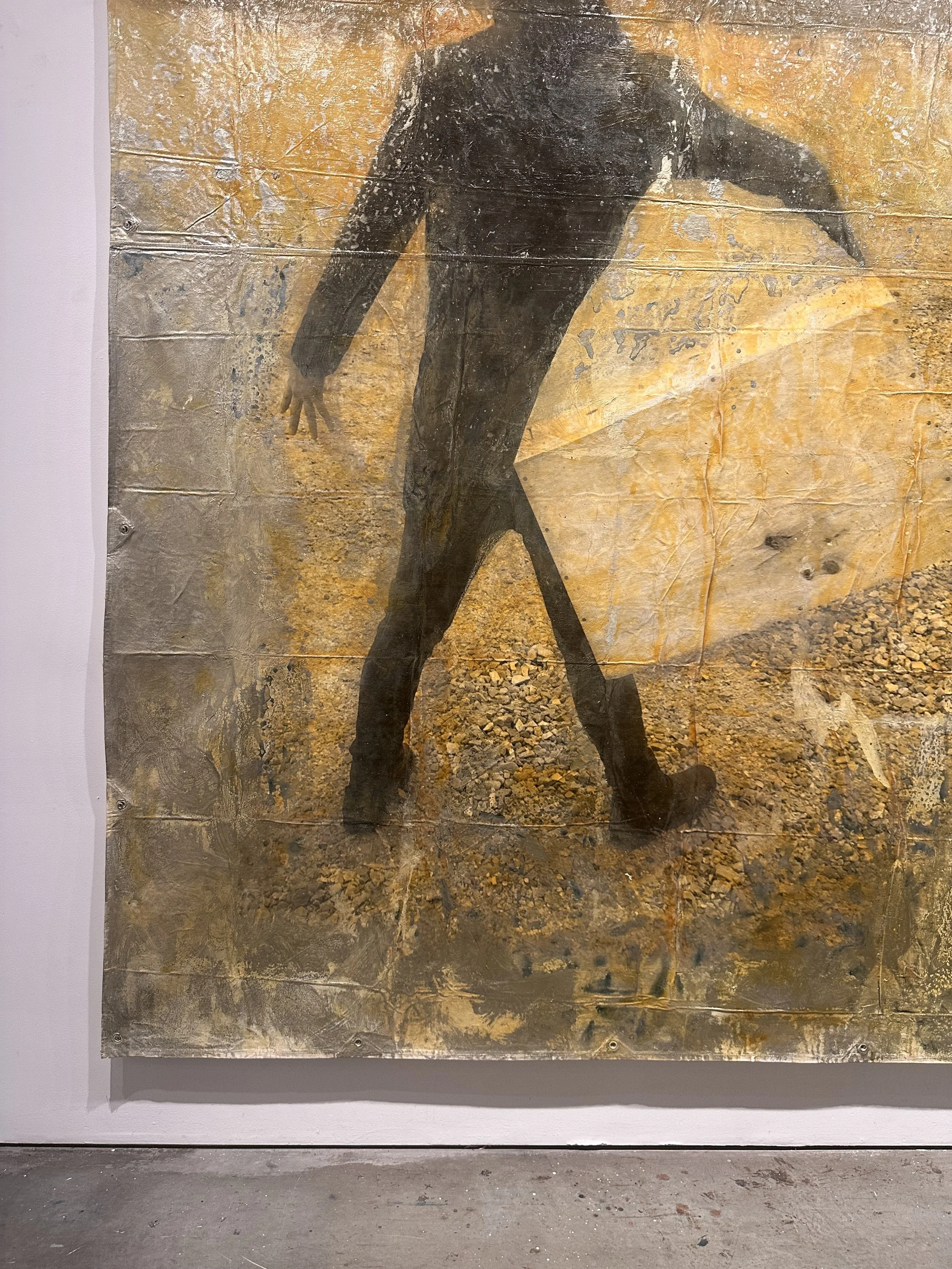
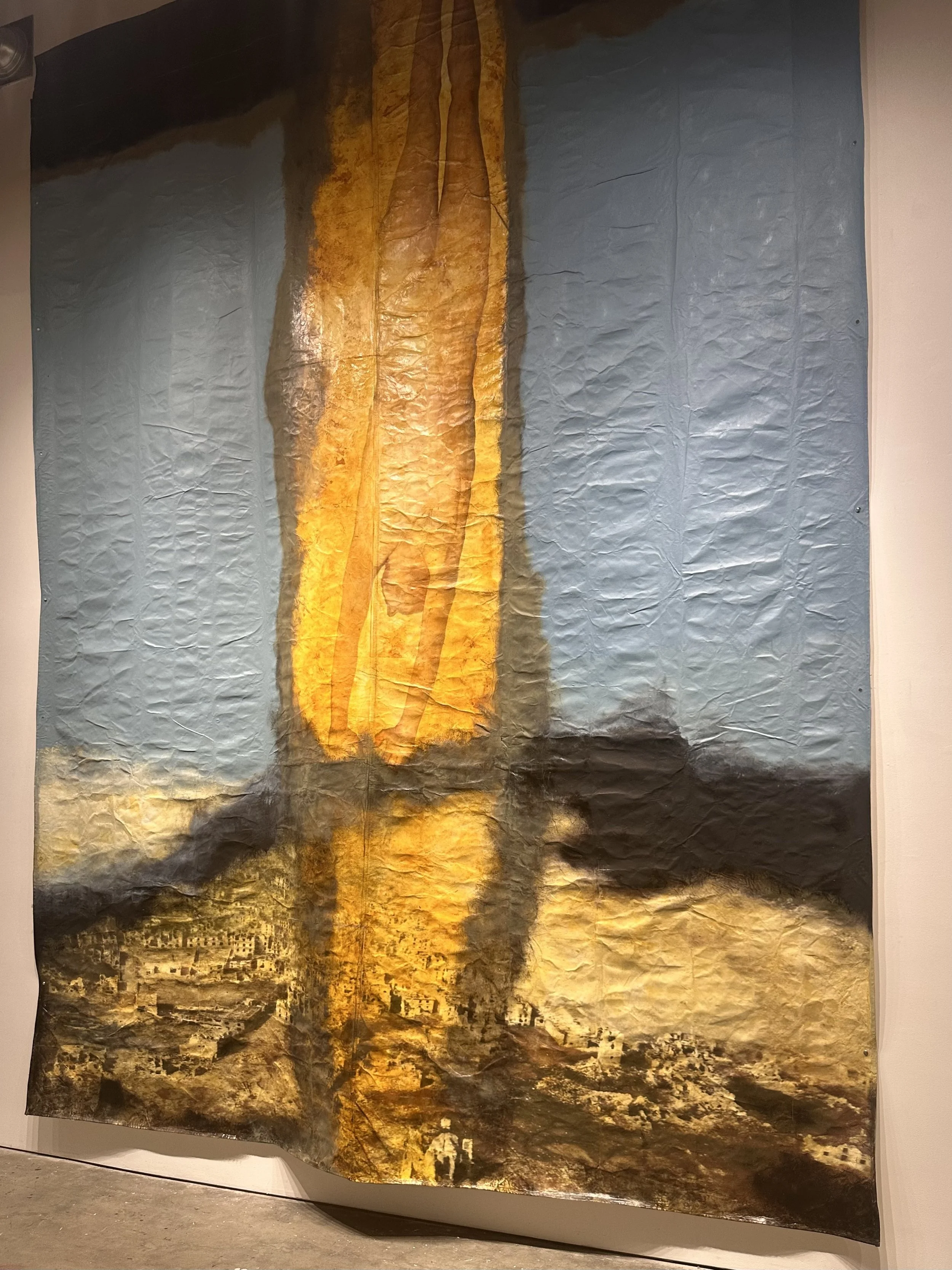
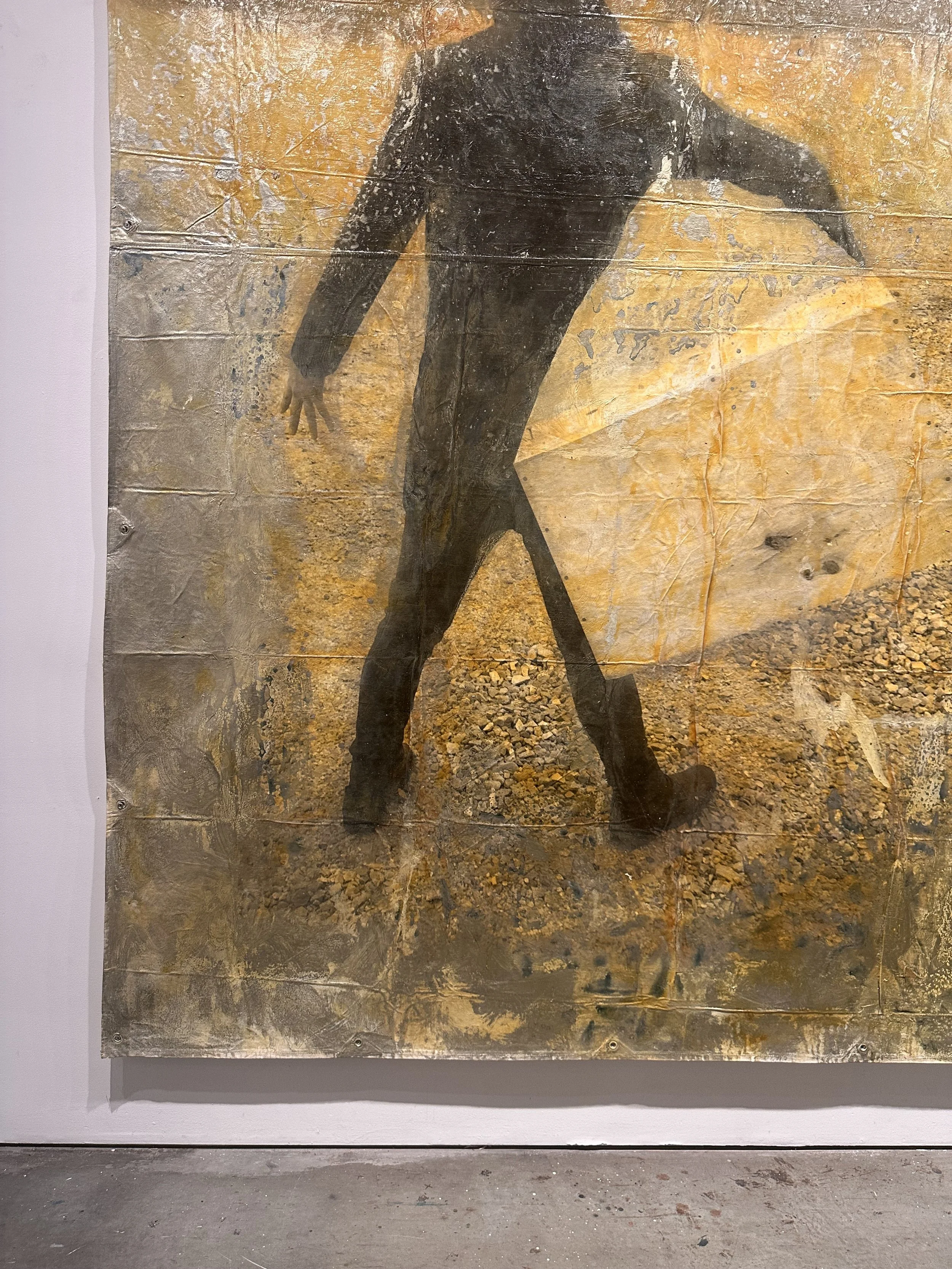
I recently visited Hughie O’Donoghue’s exhibition, Time and the Architecture of Memory, at 447 Space in Chelsea last week, and attended a robust discussion between O’Donoghue and Phong Bui (Brooklyn Rail editor-in-chief). What struck me about these mostly monumental in scale paintings on tarpaulin, was the layered delicacy of materiality, photograph transfer, and sedimentation—painting as excavation.

These supports suggest travel, as one sees the evidence of fold marks, rolling, and grommets. In other words, they can be transported and installed somewhat easily, even at such a large scale. Reading in the press release that O’Donoghue works between London and County Mayo, I sensed a restlessness, two identities, in these works—as if the rural and the urban coexist in their making. These paintings reference history, art history and the present, oscillating between material density and lightness. O’Donoghue renders the fragility of our human condition and nature’s power, where memory and stories meet, in space and time.

I featured his work in Monday’s image a few years ago, from the Irish Museum of Modern Art’s collection, and it was a pleasure to experience his paintings in situ.

Painting's Page: March 17, 2026

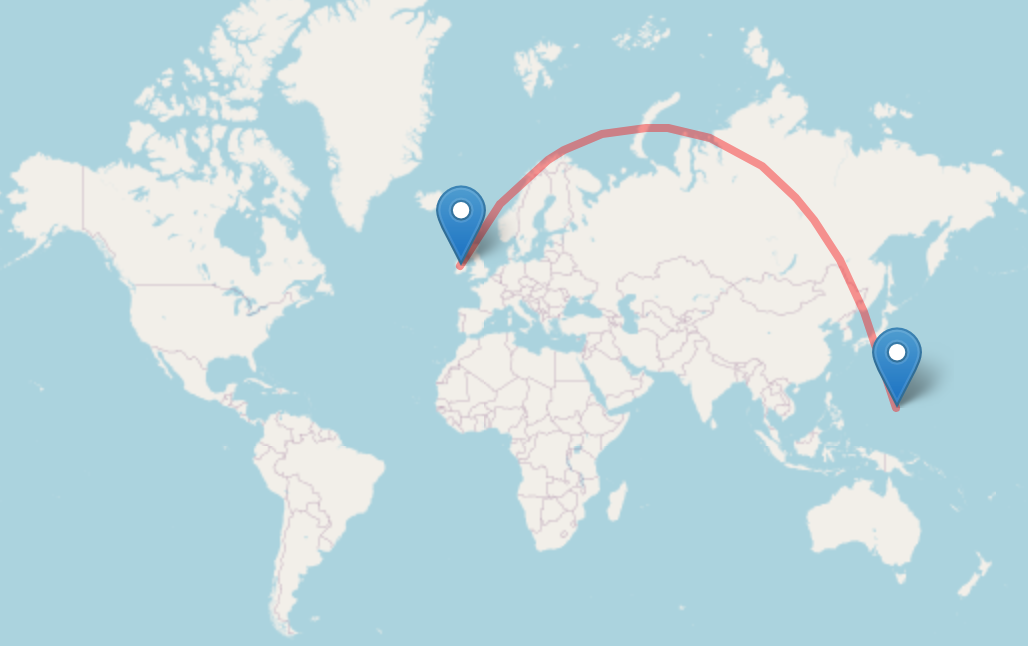
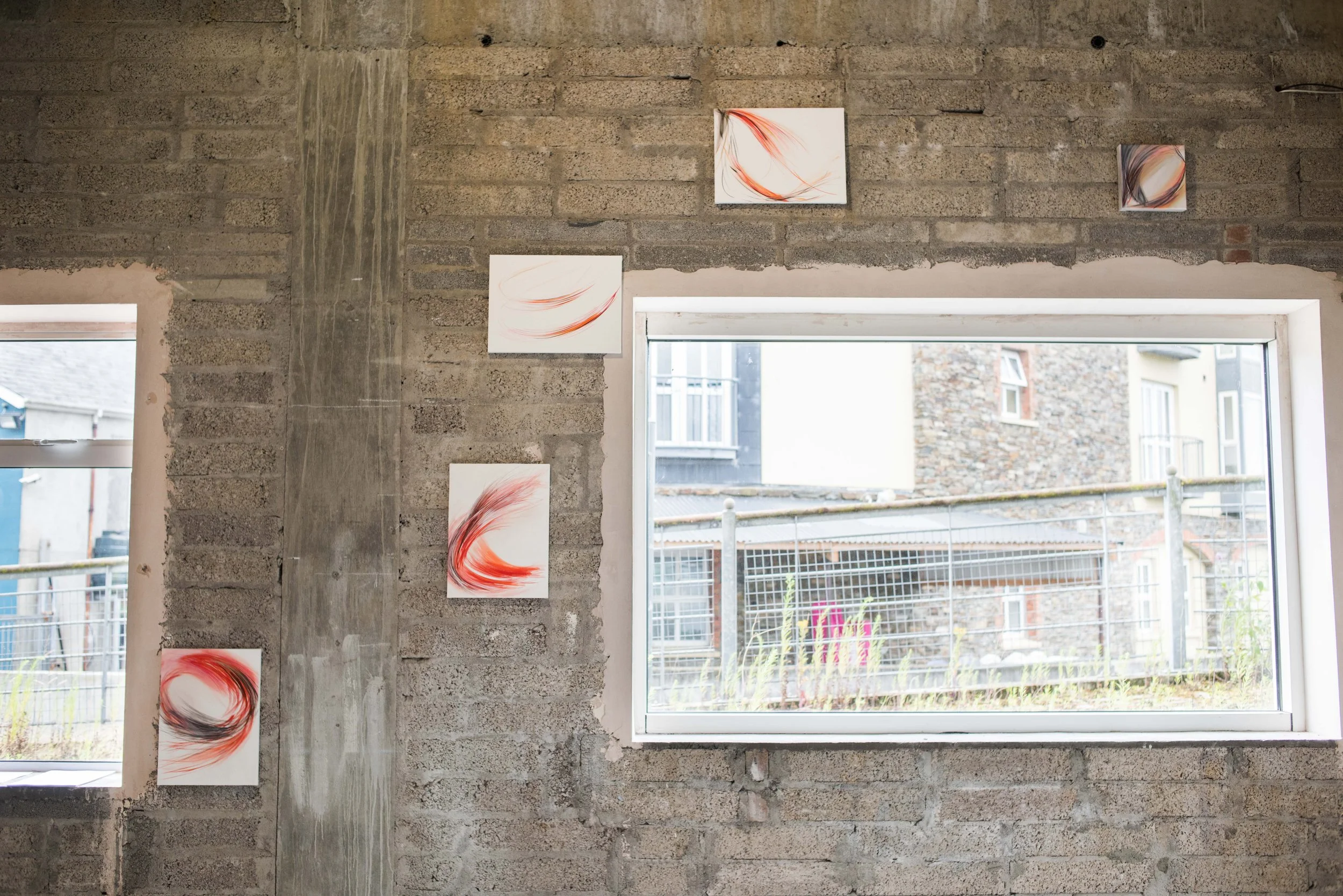
Happy St. Patrick’s Day. Today, I found myself reflecting upon a series of small paintings made in my studio at Uillinn: West Cork Art Centre, Skibbereen, Ireland while on residency in 2022. This is where my thinking of two islands, across distant locations, solidified—with a Google map reaching from Guam >> Ireland. Each location as the anchor to roots / routes and ancient, indigenous traditions.

Wayfinding, v. 6, Ilen River, Ireland, 2022
Watercolor, acrylic ink, dye-based ink, iridescent pigment and acrylic on canvas, 30 x 30 centimeters
Private Collection: Ireland

Wayfinding, v. 8, Ilen River, Ireland, 2022
Watercolor, acrylic ink, dye-based ink, iridescent pigment and acrylic on canvas, 25 x 25 centimeters

Wayfinding, v. 9, Ilen River, Ireland, 2022
Watercolor, acrylic ink, dye-based ink, iridescent pigment and acrylic on canvas, 30 x 30 centimeters

Wayfinding, v. 7, Ilen River, Ireland, 2022
Watercolor, acrylic ink, dye-based ink, iridescent pigment and acrylic on canvas, 20 x 20 centimeters

Installation of paintings on view at the O’Driscoll Building, Skibbereen, Ireland | As part of the group exhibition Re:Group: Fragments in Constellation.