I’ve just returned from Basel, to view the Helen Frankenthaler exhibition at Kunstmuseum Basel, along with the permanent collection. What an inspiring few days!
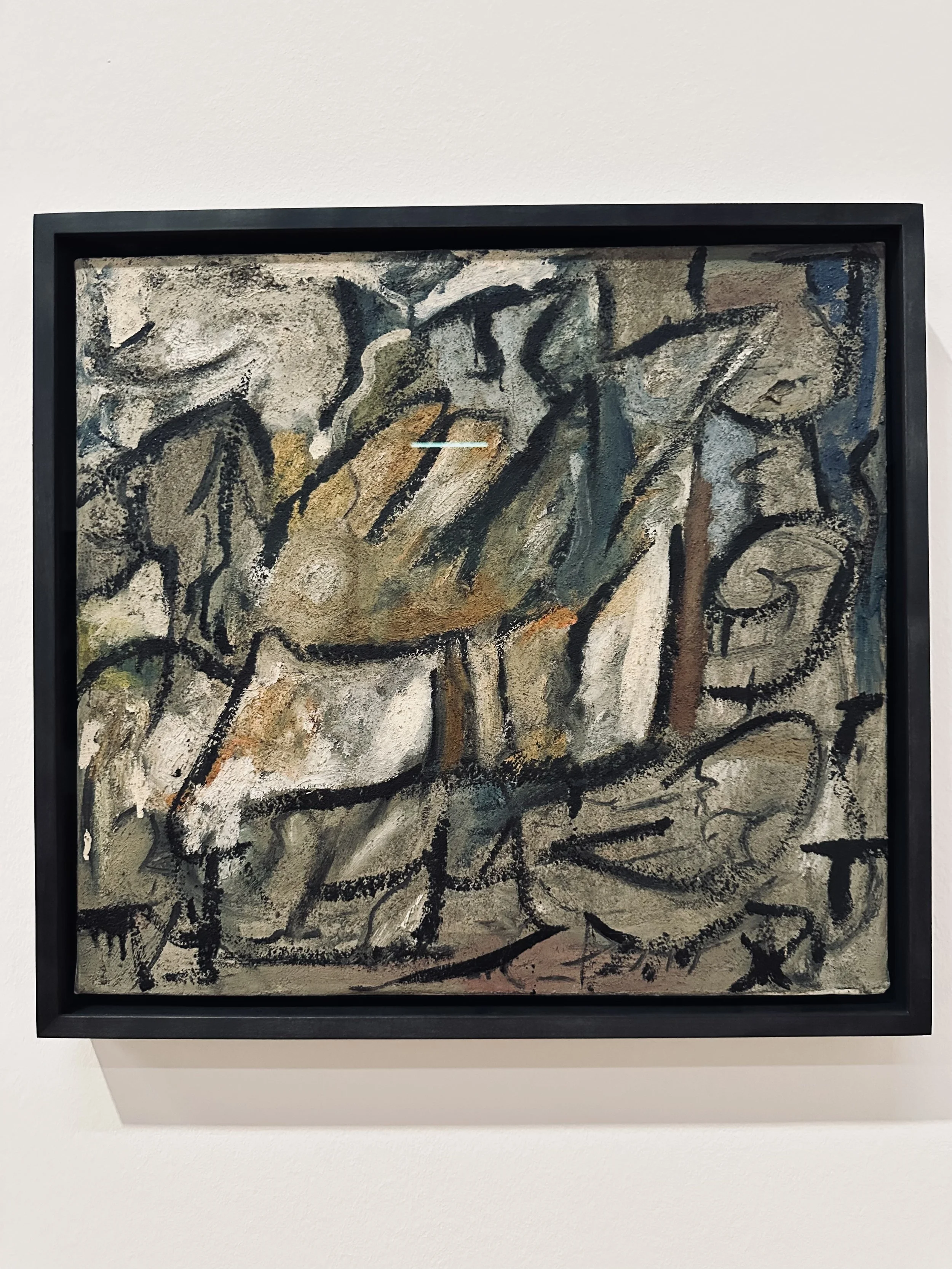
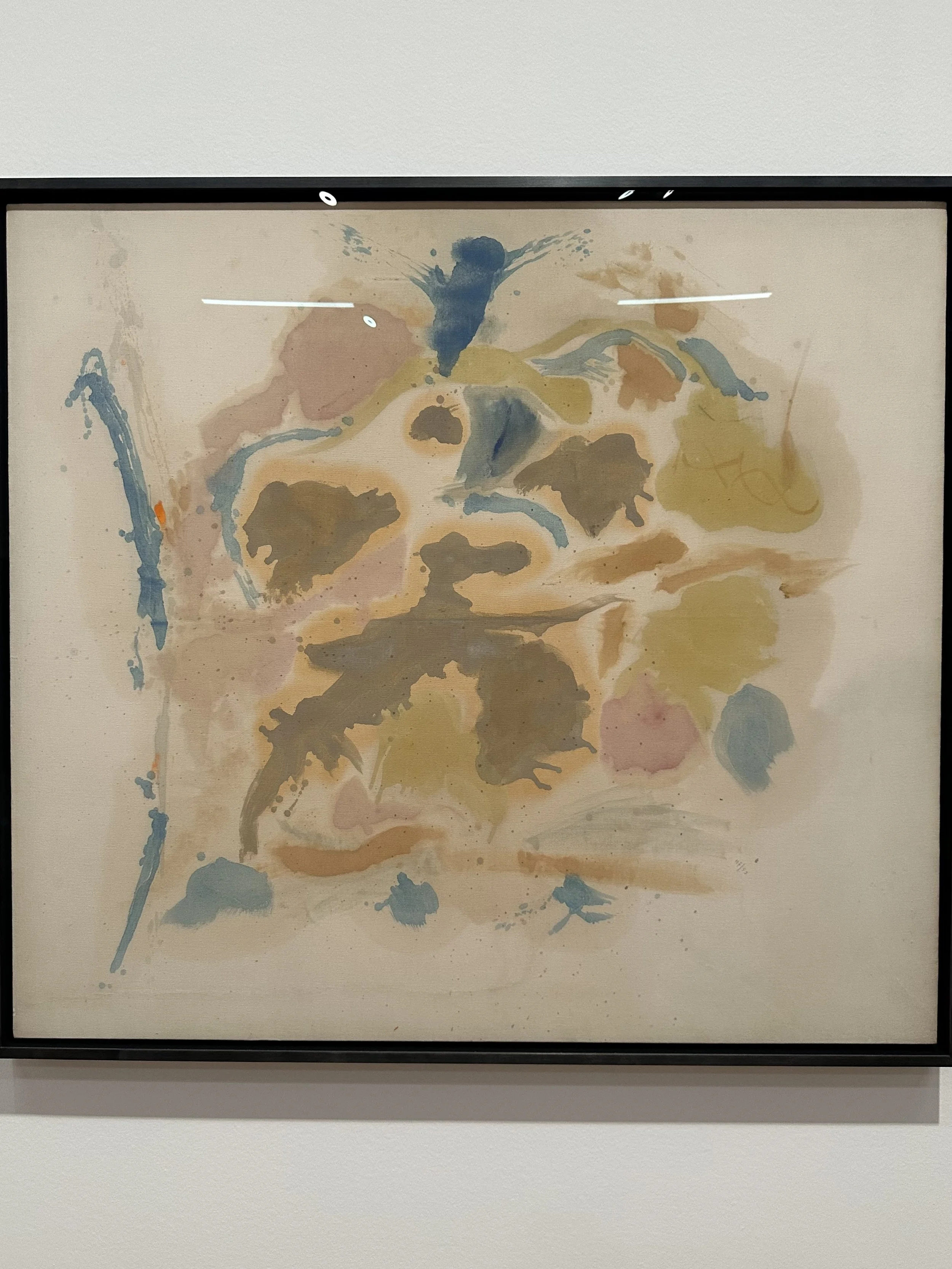
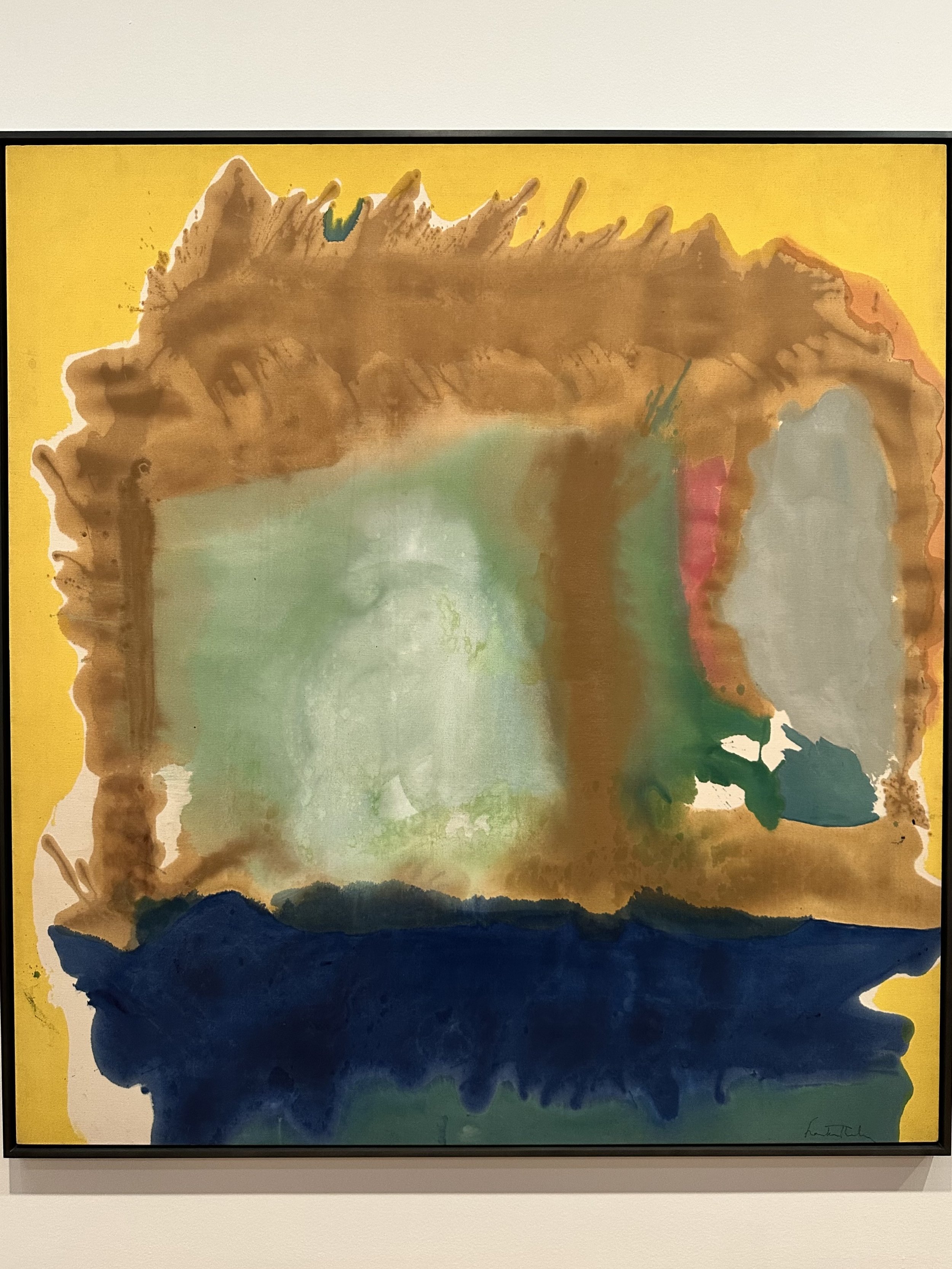
In viewing Frankenthaler’s early work, August Weather (1951), I found that she shared a great affinity with fellow abstract painter Lee Krasner, in palette, form and composition. Then a few years later, in Shatter (1953), her process opens up by methods of pouring, staining—her shapes loosen via layered transparencies of pigment on raw canvas. Another surprise was to encounter Flood (1967), an image which I’ve viewed several times online, but never encountered its enormous scale in situ—Flood literally swallows the wall.
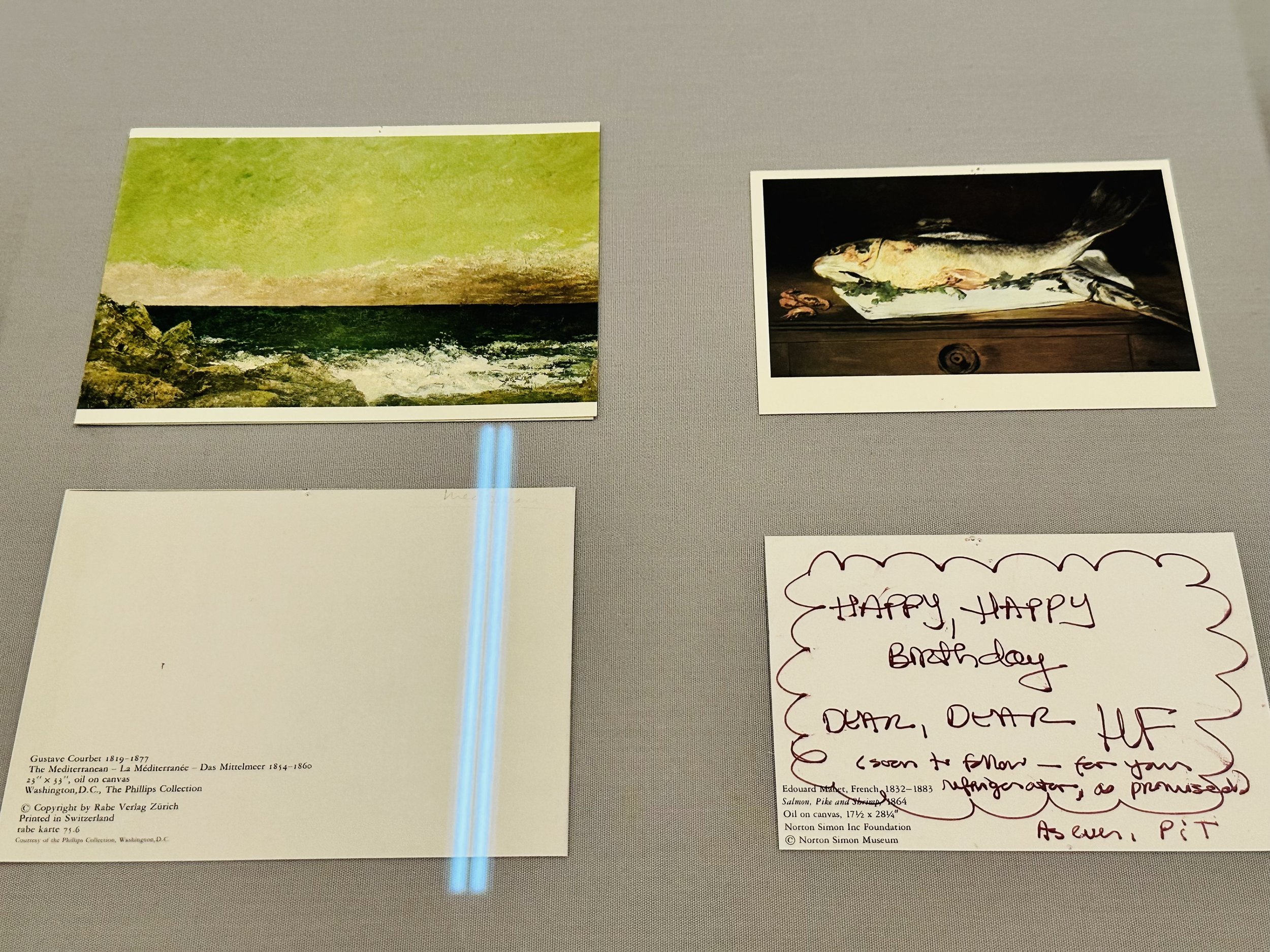
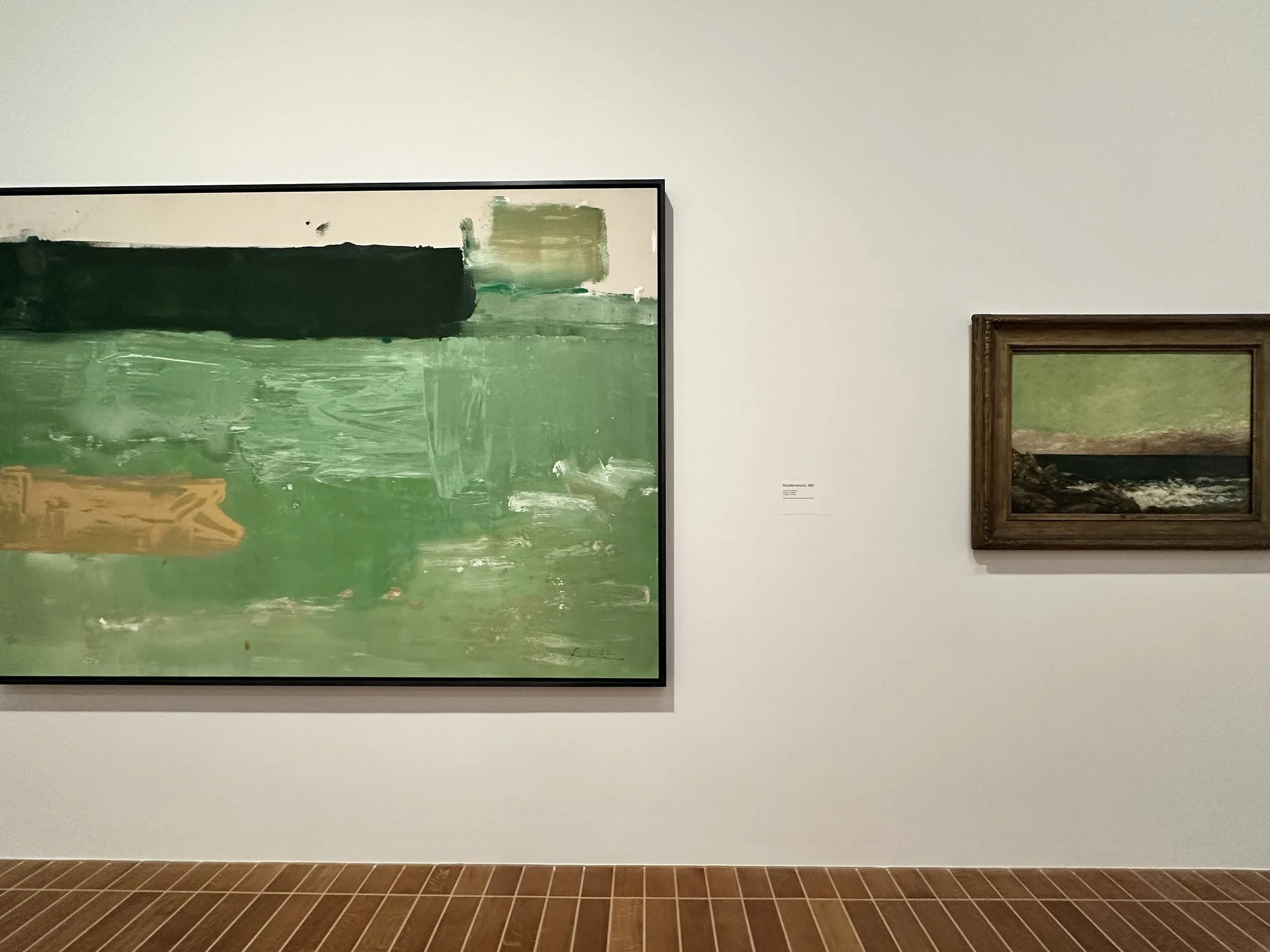
It was a revelation to see adjacencies of works from art history that she directly quotes or reinvents via abstraction. After viewing a recent panel discussion on Kunstmuseum’s YouTube channel, I learned that this installation of pairings has never been done before, but it was Frankenthaler’s wish to one day realize it. There was a combination of works from various collections or the printed images of said works installed next to Frankenthaler’s paintings. For example, the viewer encounters a seascape by Gustave Courbet from the Philipps Collection in Washington, D.C., a painting with a sharp horizontal line dividing the spatial zone of sea and sky. Frankenthaler literally flips the composition, where the sky is below, the sea is above. Its expansive horizontality and chroma directs our gaze from one side to the other, a dream-like sensation from nature.
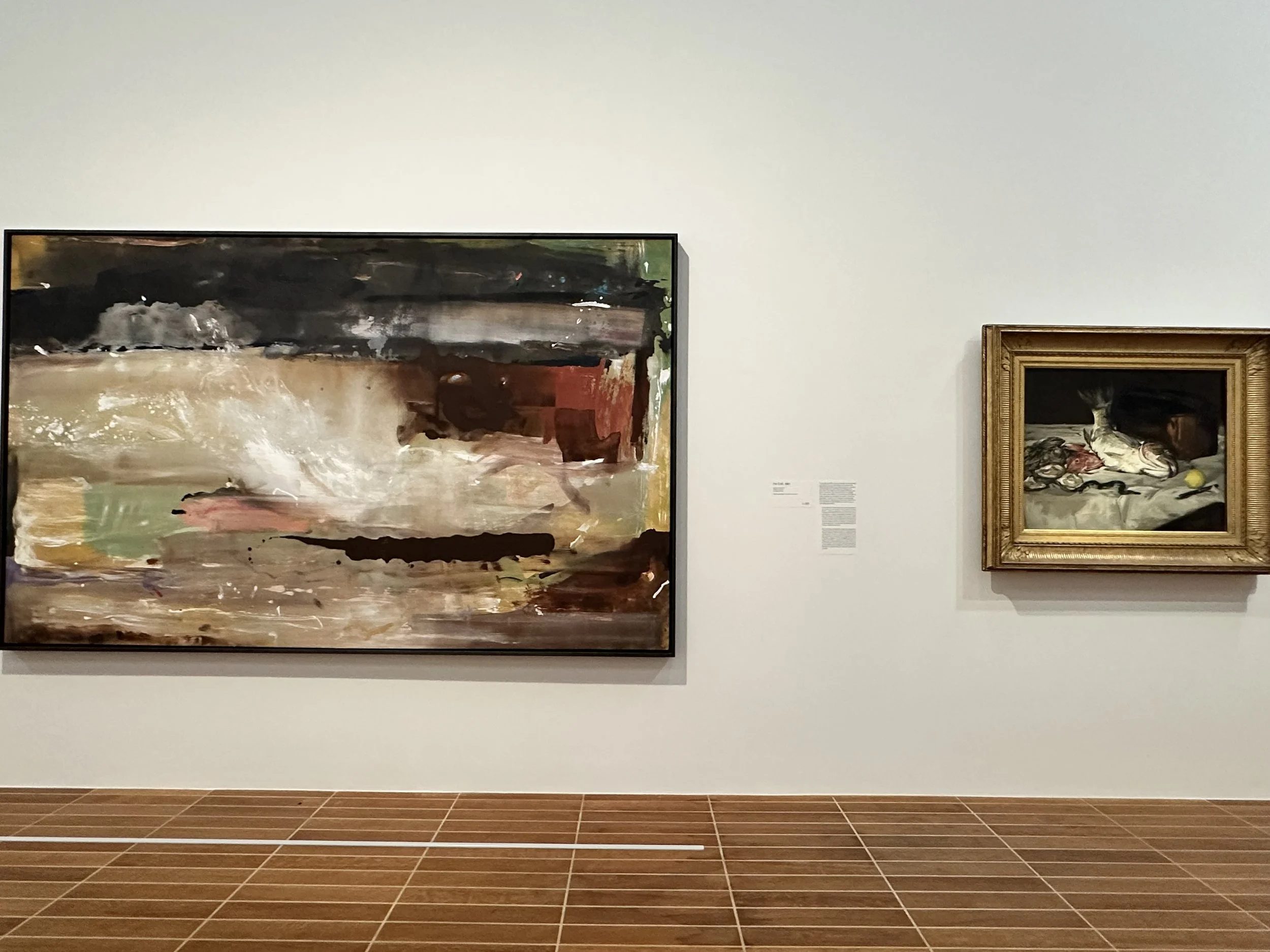
The other pairing that struck me was her work installed next to a Manet still life painting from the Art Institute of Chicago. Frankenthaler removes the fish, and explodes Manet’s still life—objects disintegrate into pure gesture, pure paint, the painting’s proportions enlarged, as if engulfing the intimate viewing of a still life. The curators also included postcards in a vitrine, of which I was thrilled to view. As we artists keep similar postcards or printed images of other paintings pinned up to our studio walls, as bookmarks, or send them to our close friends and interlocutors. What a surprise to find one sent to Helen Frankenthaler by the great curator and writer, Phyllis Tuchman!
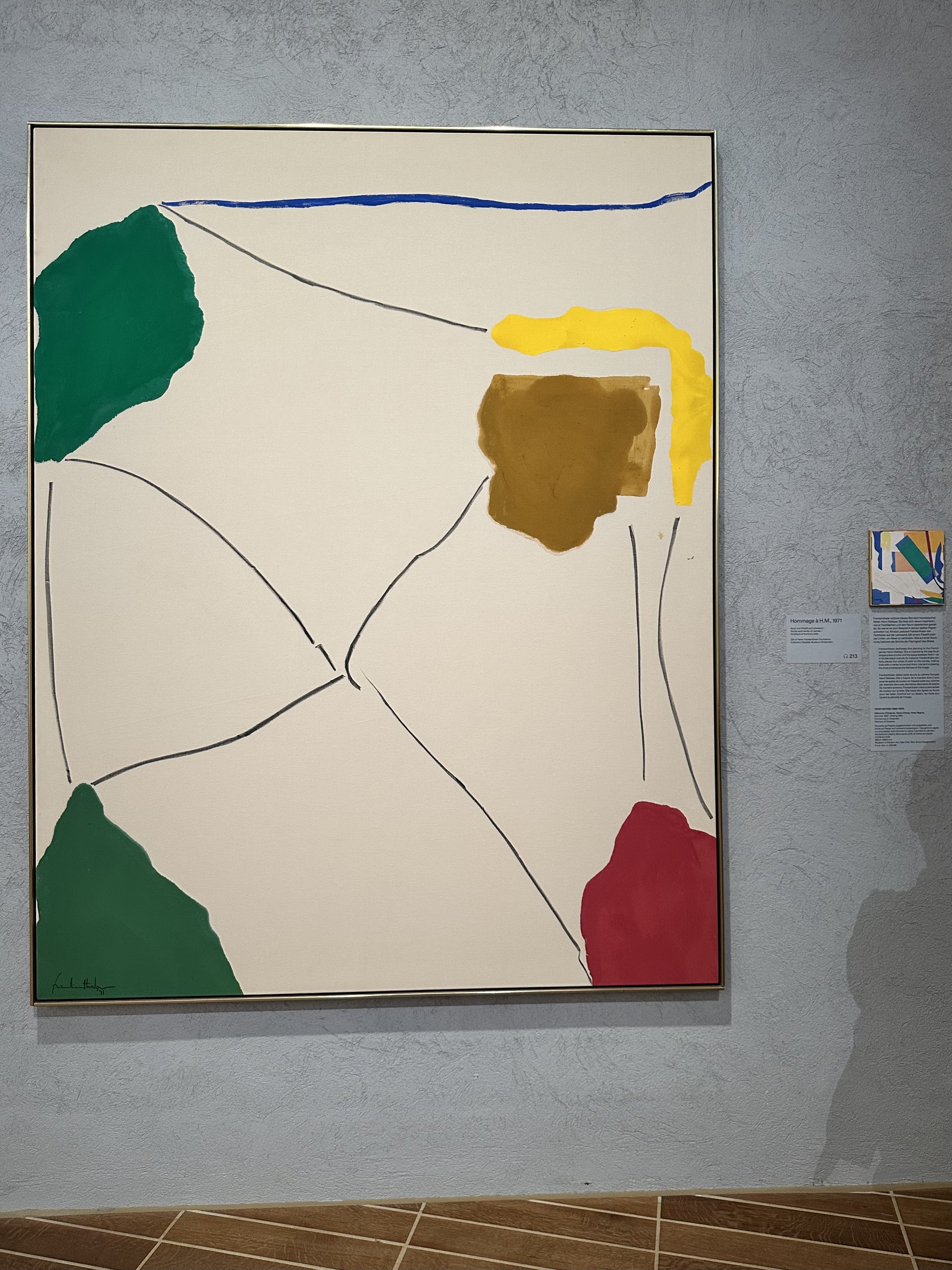
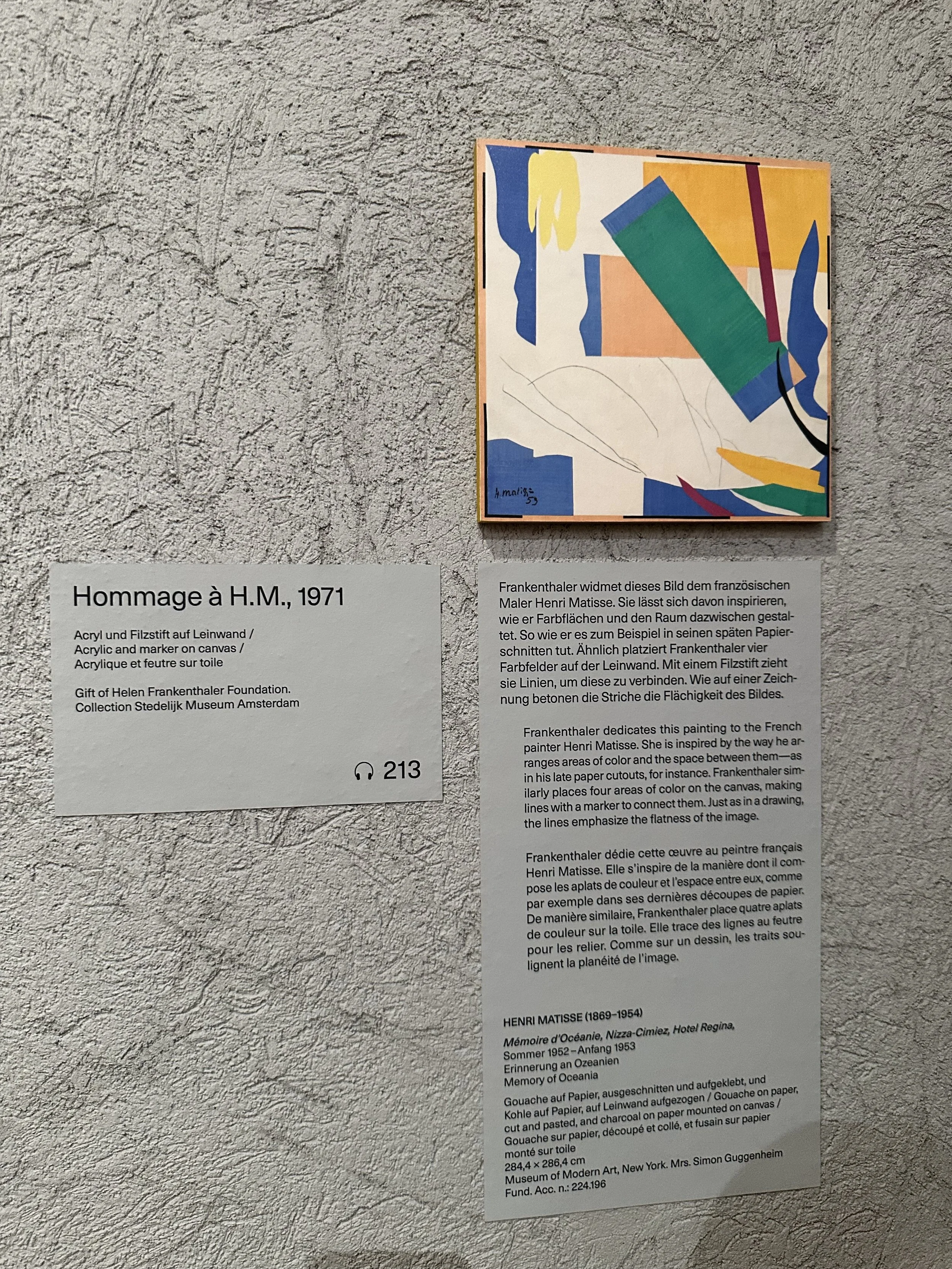
My journey to Basel was a palimpsest of discoveries. Another surprise was to find Frankenthaler’s homage to Henri Matisse’s—Memory of Oceania (1952-1953), a painting I’ve viewed several times at the Museum of Modern Art in New York. The image of this painting is pasted into my music paper notebook, which I use as a sketchbook of notes on process, images of other paintings, thumbnails of projects I am planning, etc. Frankenthaler’s rendition of Matisse reminded me of Mary Heilmann, (1940-2026), the late, great painter from California whose work was admired the world over, as was she. We continue to learn and are in awe of our forebears.
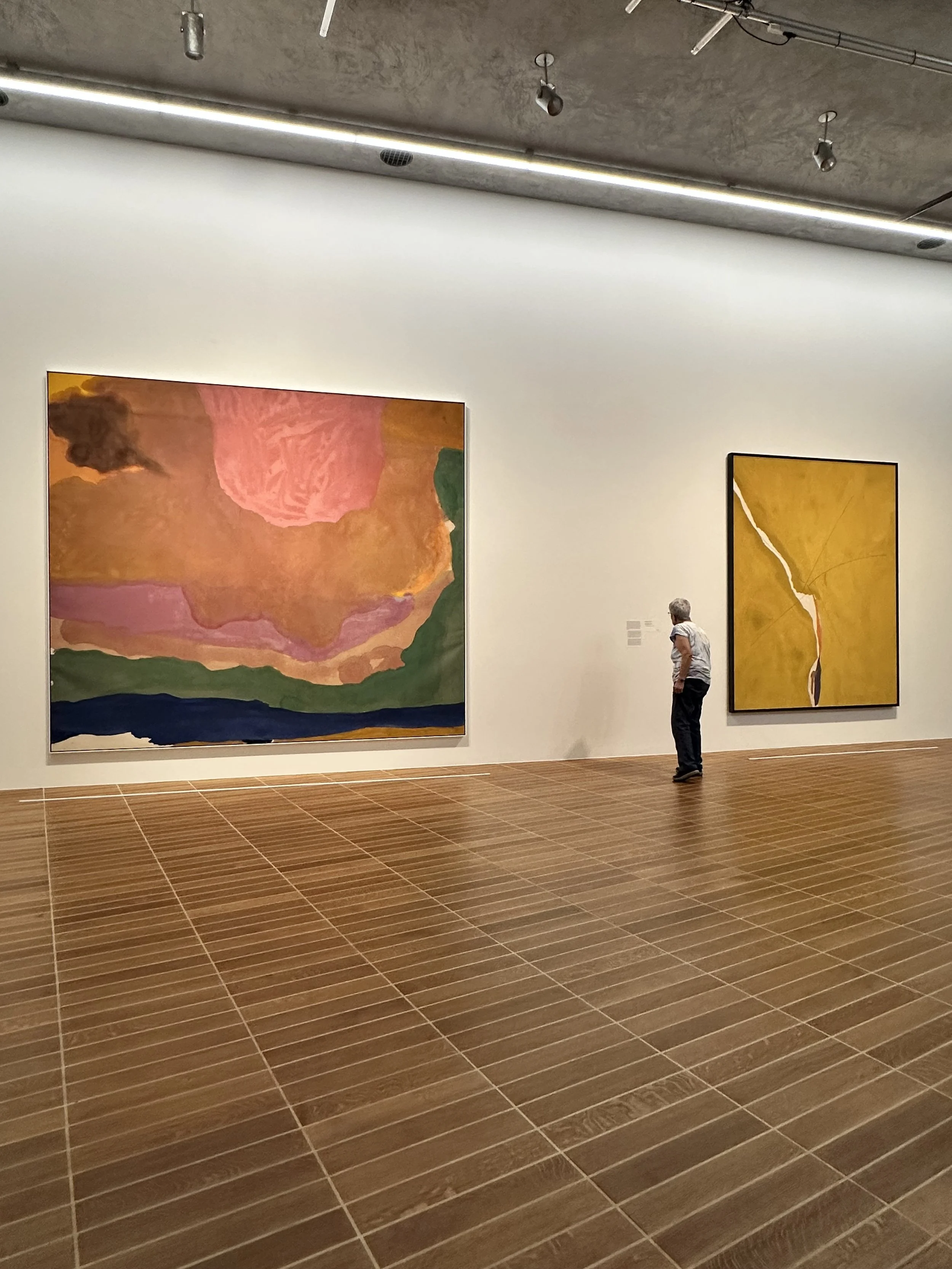
August 2026: Me standing in front of Helen Frankenthaler, Cloud Burst, 2002, Acrylic on canvas, Helen Frankenthaler Foundation, New York, Kunstmuseum, Basel, Switzerland.
Lisa Blas, 2021-2022: Pages from my music paper sketchbooks that include notes, works in progress and images of inspiration.
Photo: Brad Farwell